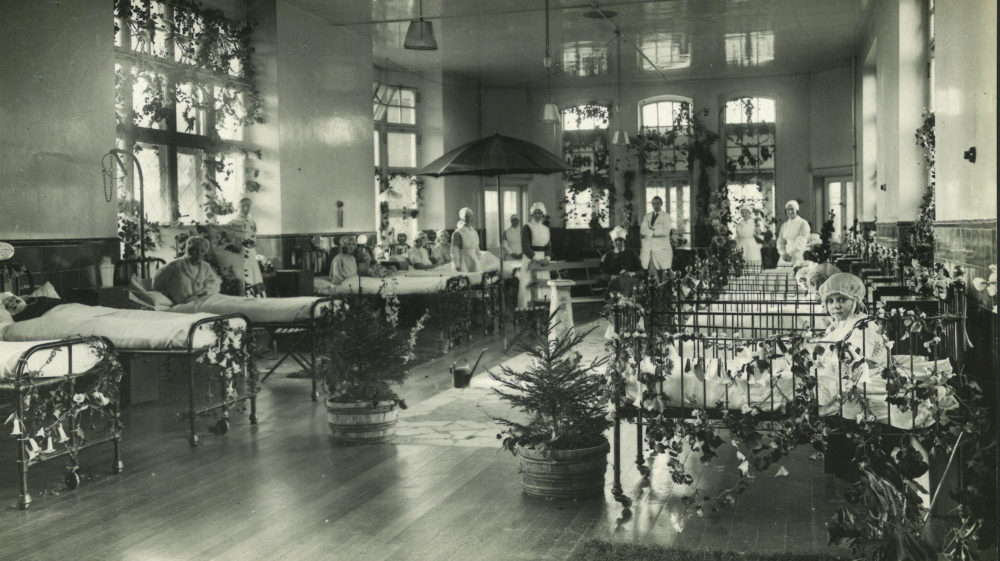
Decorated hospital ward, c. 1900
The photograph shows a beautifully decorated hospital ward, with flower ornaments and small Christmas trees. Even the beds are richly decorated with flowers (c. 1910). Our collections contain quite a number of photographs from hospital wards from both Royal Sussex County Hospital and Royal Alexandra Hospital (which is now a part of RSCH) which are decked out in celebration of public holidays or illustrious visits.
Image courtesy of Brighton & Sussex University Hospitals NHS Trust.
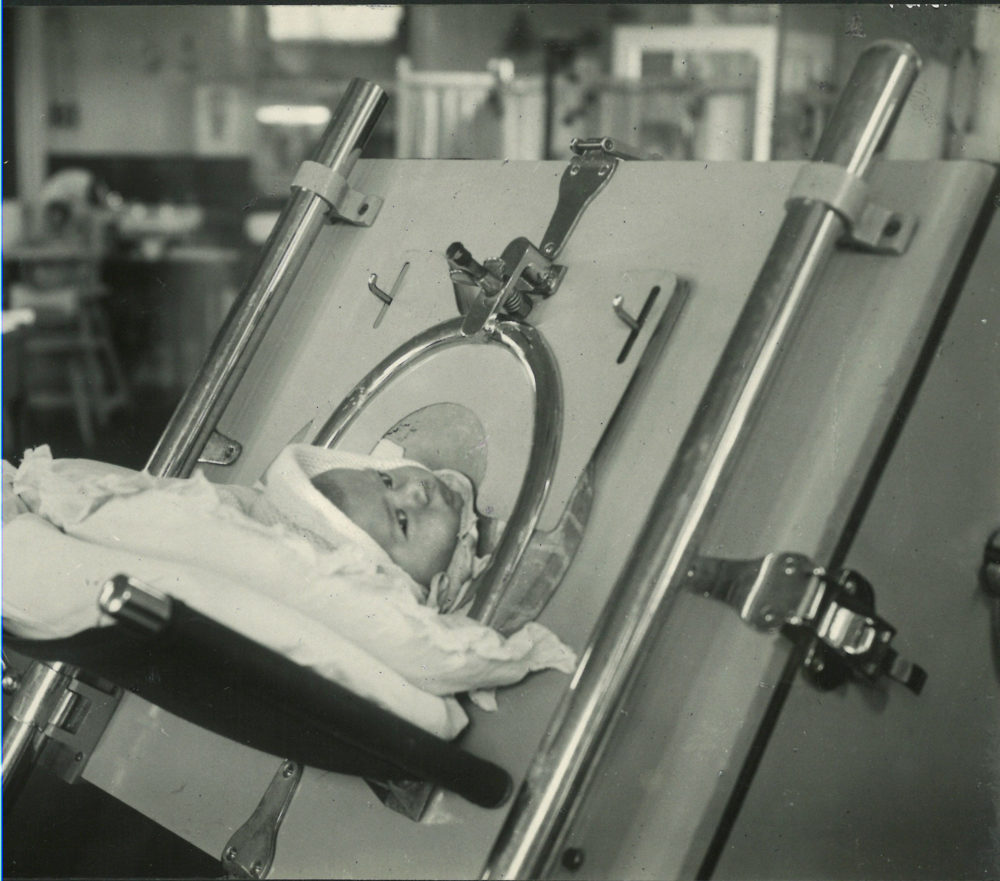
Infant in iron lung, 1940s
A very young patient in a so-called iron lung, the first model of which was invented in 1927. The iron lung shown in the photograph is a Both cabinet respirator, an inexpensive model which was invented in Australia in 1937 and introduced to the UK the following year. Iron lungs helped polio patients whose breathing was paralysed while they recovered from acute poliomyelitis. This typically meant that they had to spend one or two weeks inside the iron lung while their immune systems fought the acute infection.
Polio is caused by three different types of virus, and although 95% of cases are mild, some become very ill. One in 200 of those infected are irreversibly paralysed and 5-10% of those die without help breathing.
There is no cure for polio once a person becomes infected – it can only be prevented by immunisation. Until an effective vaccine was developed in 1953 by Jonas Salk, polio affected thousands of UK children every year and killed hundreds.
Image courtesy of Brighton & Sussex University Hospitals NHS Trust.
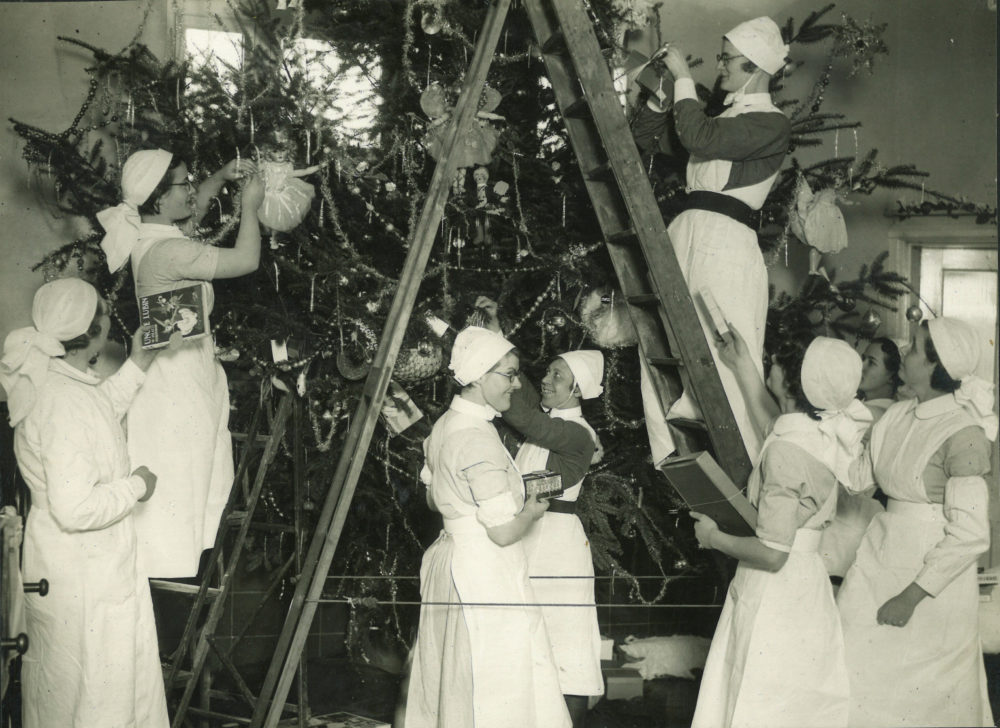
Nurses decorating Christmas tree, 1920s
Nurses decorating a large Christmas tree, having to use a tall folding ladder to reach. Many photographs that have been preserved show preparations for holidays and celebrations, with nursing staff taking pride in creating a beautiful environment for their patients. The photo was taken in the 1920s, which can be seen in hairstyles and the manner in which the cap is tied.
The enormous Christmas tree is a change from the much smaller one, a couple of decades earlier, and reflect changing fashions.
Image courtesy of Brighton & Sussex University Hospitals NHS Trust.
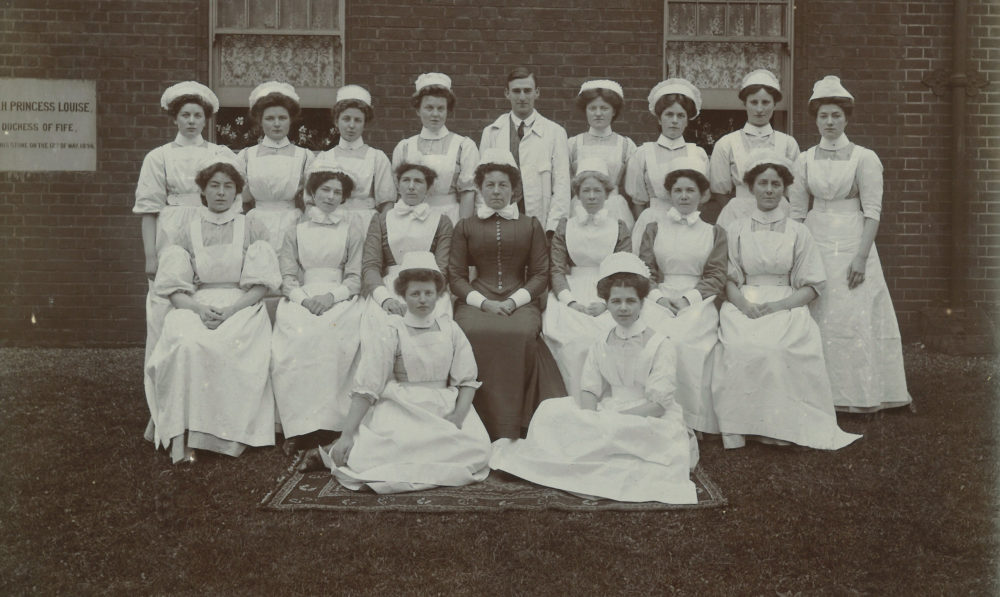
Hospital staff, group photo, c. 1900
In this photo, which shows a group of nurses and a physician in a white lab coat arranged symmetrically around Matron in her dark dress without apron, we see degrees of personal expression in the way hair is styled, and the starched cap is arranged, reflecting the fashion at the time. The composition of this particular group portrait is particularly expressive with regards to the hierarchies within the hospital.
Image courtesy of Brighton & Sussex University Hospitals NHS Trust.
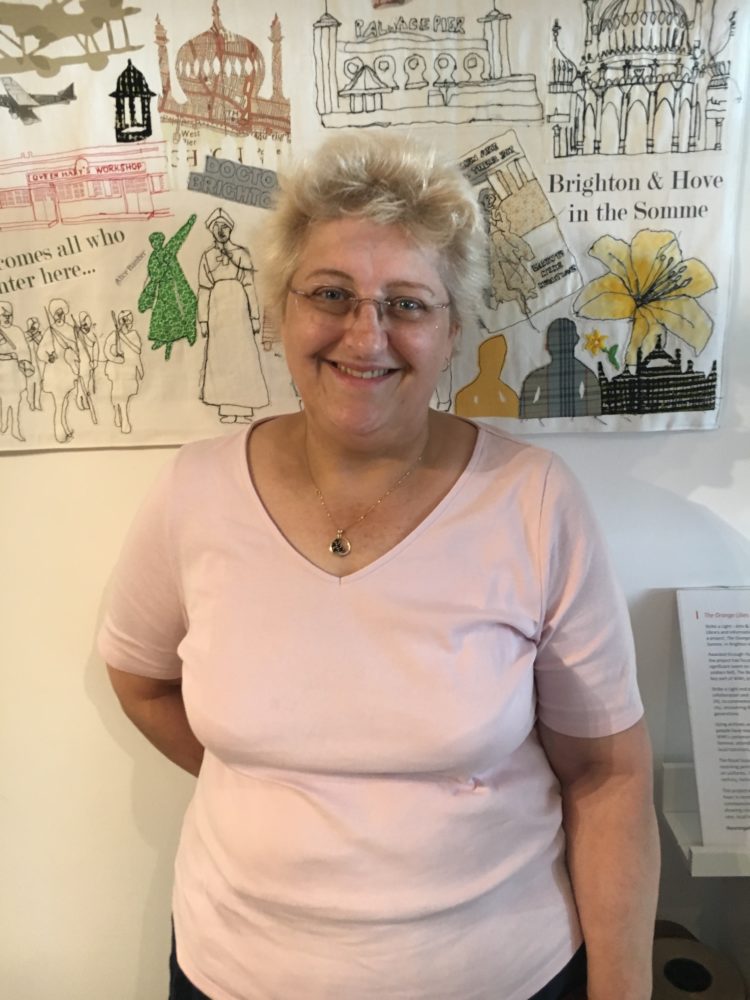
Kathy Wilson
Kathy Wilson was born in Brighton in 1963. She worked at Royal Sussex County Hospital as an x-ray darkroom technician in the mid-1980s, prior to digital technology being introduced.
Kathy says her motivation for joining the NHS was her mother, who was a nurse. She was drawn to human biology via her fascination with her mother’s anatomical textbooks.
Kathy talks about her five-and-a-half-year career as a darkroom technician, which she said she used to progress to a job as a medical secretary.
She talks later about being a patient, including having dental work and knee surgery. And the hospital hierarchy being much less complex when she was employed by the NHS than it is now.
Recorded on 29/08/2019 (date incorrect on recording) in Brighton, UK.
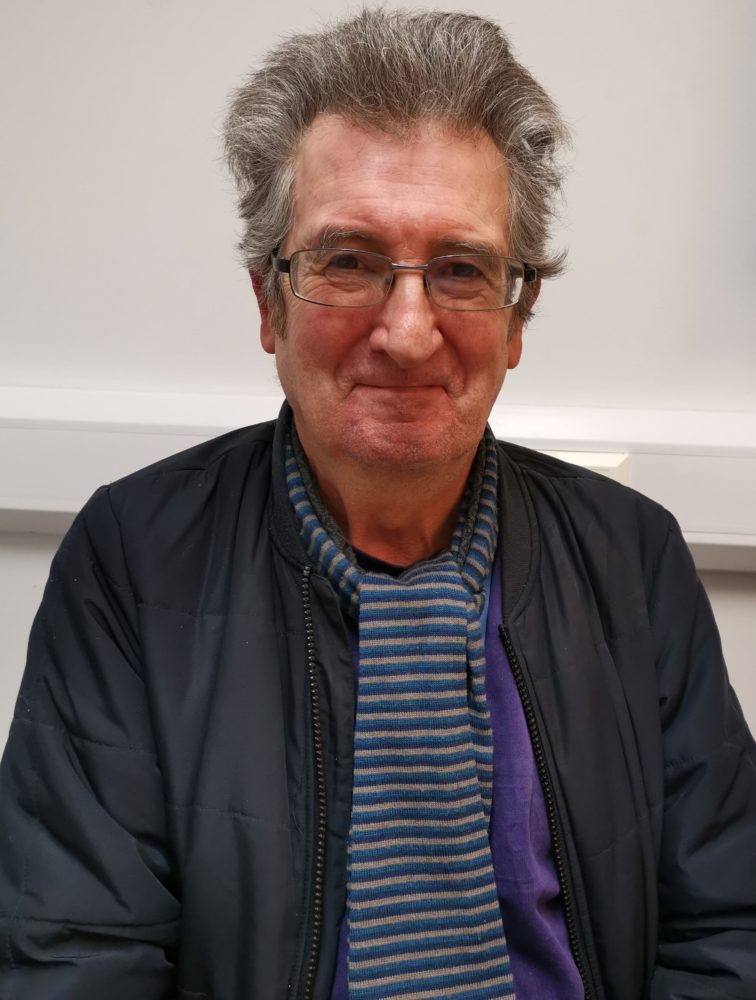
Gary Scarfield
Gary Scarfield was born in Brighton in 1954.
Gary recalls a number of memories when needing hospital treatment, at various venues, including Royal Sussex County Hospital. He had his tonsils removed in 1959 aged five, he remembers little more than the ice cream. He also had treatment for a football injury (broken leg) in the 1970s and a sinus operation in 1984.
He talks about having had a stroke diagnosed in 2007, following which he received treatment. He recounts an elongated stay in hospital over five years from 2012, and also talks about a gall bladder removal operation in 2018. Praises the ‘fantastic service’ he has received from the NHS.
Recorded on 18/12/2019 in Brighton, UK.
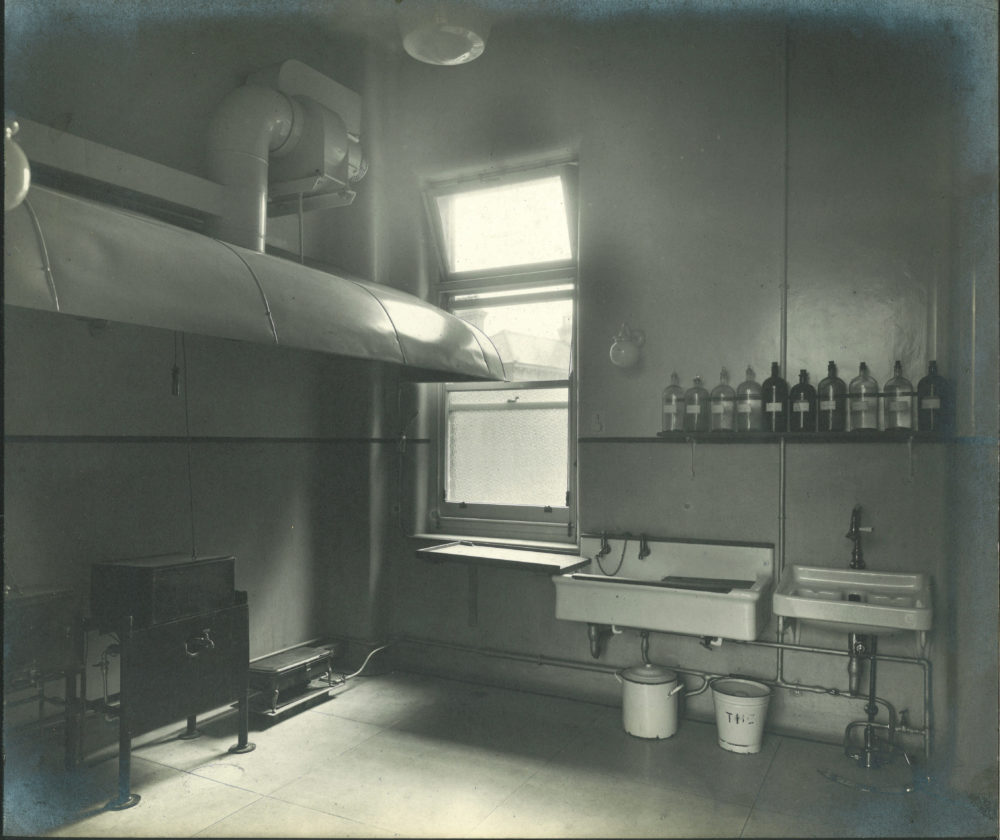
Utility room, Royal Alexandra Hospital, c. 1910
A utility room at the Royal Alexandra Hospital, which is now part of Royal Sussex County Hospital. Cleaning materials and equipment are shown, giving an idea of how hospitals and hospital equipment was cleaned and sterilised at the time. (c, 1910). The labels on the row of bottles for chemicals and cleaning fluids on the shelf cannot be read, but they would have included carbolic acid and bleach derivatives. Steam sterilisation was introduced in the late 19th century and gradually became widely used for surgical instruments.
Image courtesy of Brighton & Sussex University Hospitals NHS Trust.
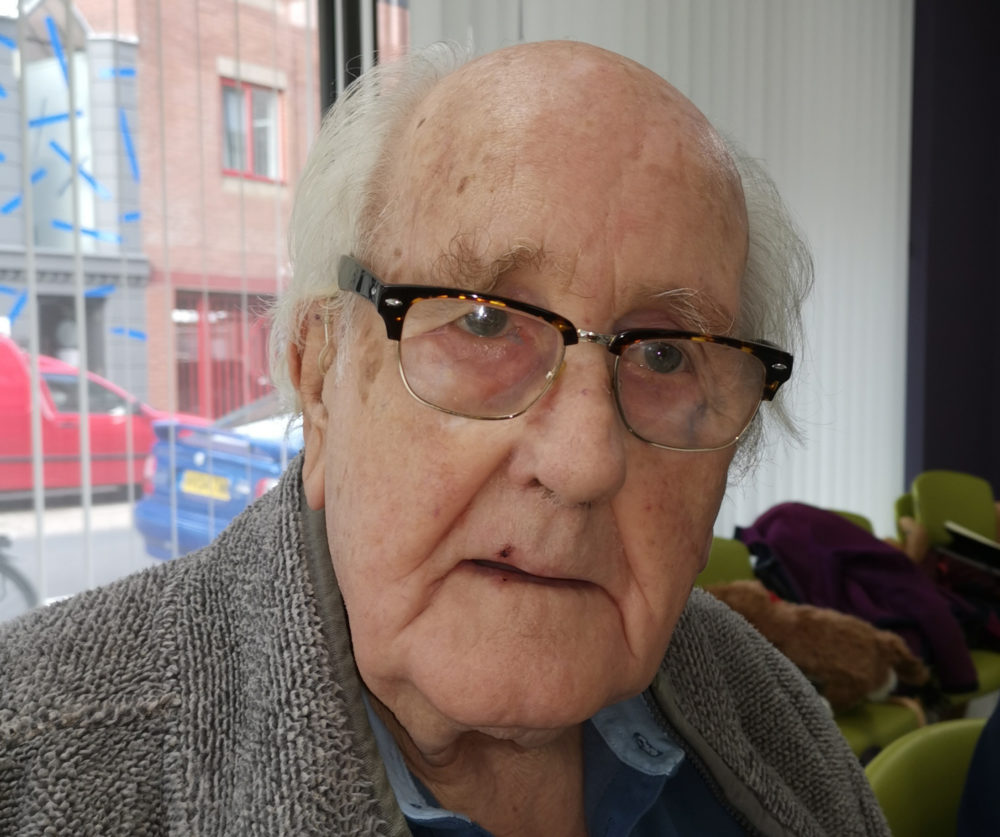
Ted Knight
Ted Knight (born 1933) worked for Brighton Corporation Water Works for 42 years, with Royal Sussex County Hospital being one of his main sites. Ted also attended the hospital as a patient on three occasions; for a back injury and kidney troubles in the 1960s, and for an eye injury in the 1970s. He speaks very highly of the care and RSCH nurses in his interview.
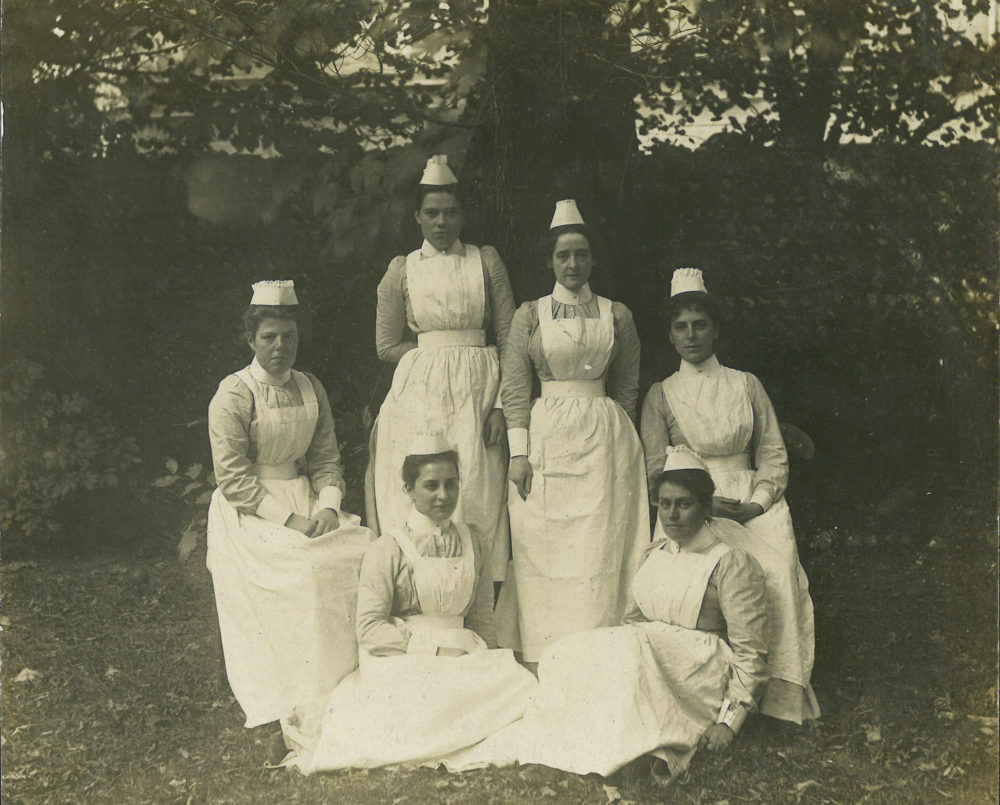
Nurses, 1890s
This group portrait shows six nurses in the Florence Nightingale-style white aprons and starched caps, posing in the grounds of Royal Alexandra Hospital, which is now a part of Royal Sussex County Hospital. Although there were small developments of this style of uniform from its 1860s design, for example the addition of apron pockets, this model would not change significantly until WW1 when more practical models were introduced.
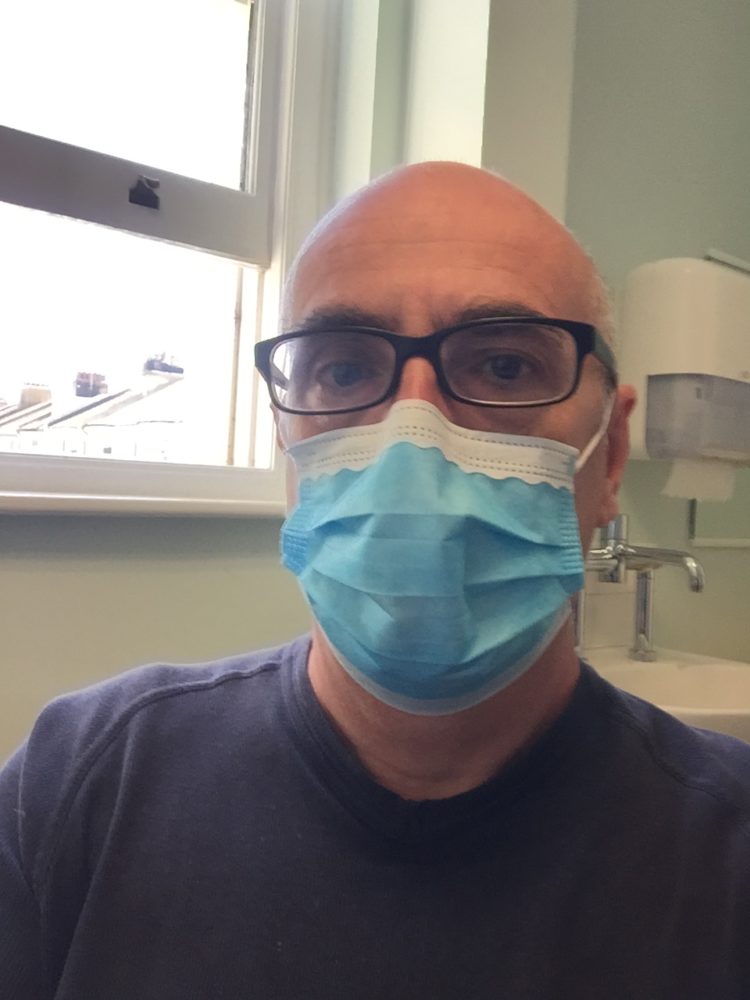
John Quin
Dr John Quin was born in Glasgow in 1961. He trained at the medical school at Glasgow Royal Infirmary in 1978-83, later becoming Registrar before moving to London, followed by Brighton in 1994.
He recalls influences that drew him to medicine being the shows he watched when he was young, such as ‘Dr Kildare’ and ‘MASH’.
Speaks about his career developments in Glasgow, the work there and colleagues, and how junior doctors were expected to work “ridiculous” hours.
Talks about his career at Royal Sussex County Hospital (RSCH) between 1994 and 2016, during which he became Associate Dean and was elected to Royal College of Physicians. He recalls his career at RSCH, including technological and medical advancements that took place and were implemented, including treatment of HIV and MRI scanners being introduced. He also comments on the ever increasing age of patients.
Recorded on 06/01/2020 in Brighton.
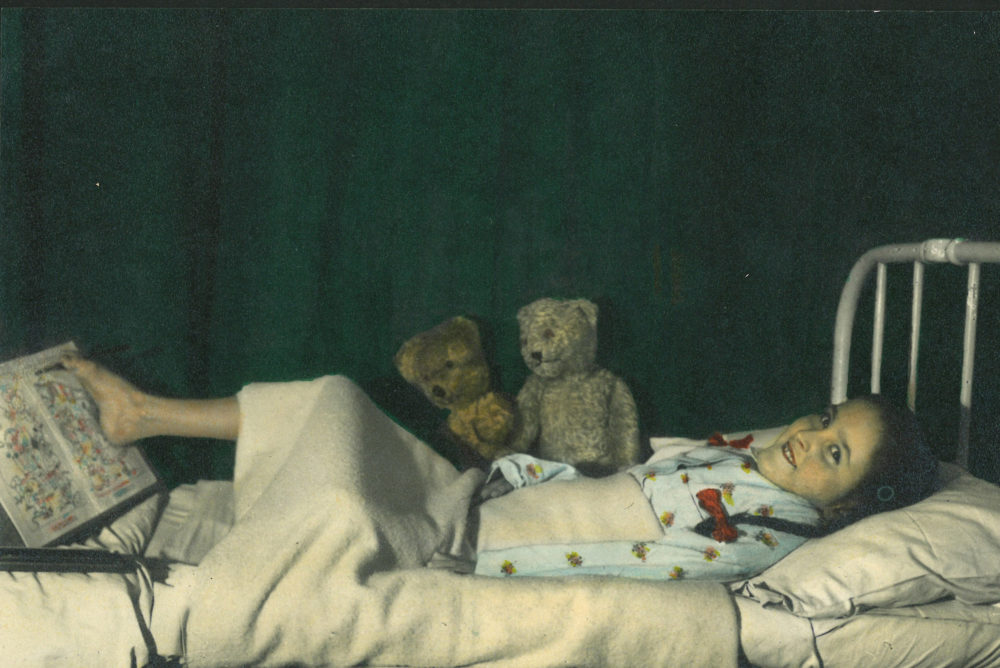
Young patient at Royal Alexandra Hospital, 1940s
A colourised photograph of a young girl at Royal Alexandra Hospital, using her foot to read a picture book. We have no records of what she was being treated for. Polio was common in the 1940s, but it is unlikely that it would have caused paralysis of the upper body, rather than the legs. Judging by the fairly healthy-looking smile on her face, it is possible she was on a path to recovery, but was asked to pose for the photo.
Image courtesy of Brighton & Sussex University Hospitals NHS Trust.
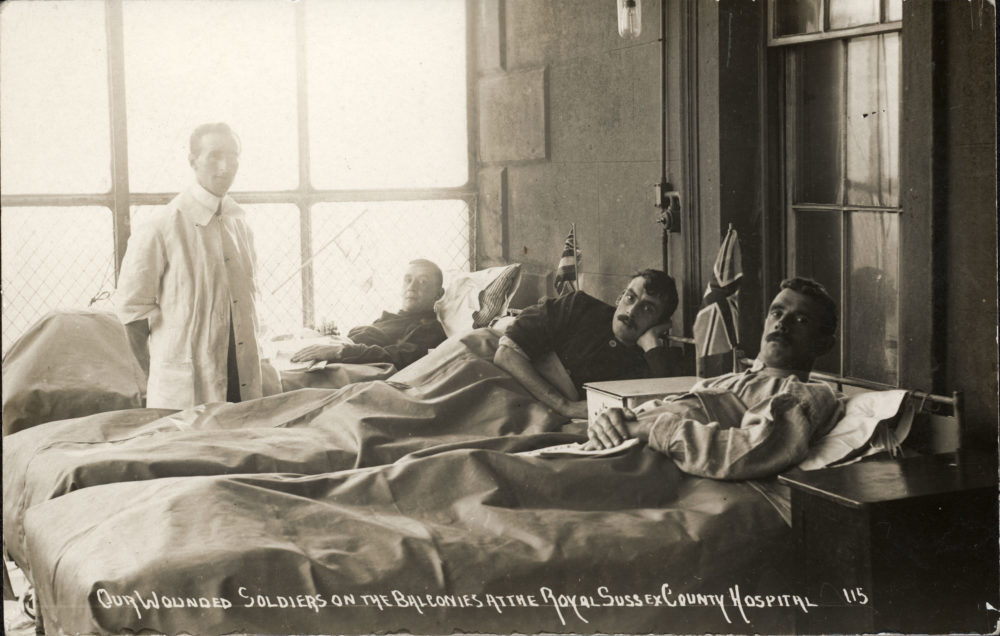
World War I, soldiers, Royal Sussex County Hospital, circa 1914
Balconies on the south side of the main building were added in 1912-13, to provide patients with more opportunities to benefit from open air.
During the First and Second World Wars The balconies were used to house soldiers who had been injured. The hospital received its first group of 69 men in October 1914; a special Committee for Wounded Soldiers was established, which undertook the work of fixing uniforms and organising appeals for personal items such as games, writing paper and smoking paraphernalia.
While at the hospital, soldiers were often wheeled out onto the balconies so they could experience the fresh sea air.
Image courtesy of Brighton & Sussex University Hospitals NHS Trust.
Helen Brownstone
Helen Brownstone was born in London in 1946. She became a volunteer at Royal Sussex County Hospital (RSCH) in 2005 following an operation and invitation to become a voluntary panel consultant.
Helen starts by talking about her experience as an outpatient of the Gastric Diseases unit in the Millenium Building at RSCH in 2005.
She talks about her work as a volunteer, how she helped support other patients with gastrointestinal diseases, training she received, and her work as an ‘expert patient tutor’, which she did for 10 years.
Helen remembers that in approximately 2009, the Intestinal Bowel Disease patient group was invited to work on the 3Ts project to give ‘patient friendly’ advice regarding hospital services, from patients themselves, in order to improve provision in the new hospital.
Recorded on 11/11/2019 in Brighton, UK.

John Hartley
Dr John Hartley was born in Sheffield in 1946. He trained at University College Hospital, London to do Clinical Studies, qualifying in 1971. In his final year he did an elective at Hammersmith Hospital Respiratory Department, London. This was followed by experience at hospitals in Newcastle, Cardiff and Brighton & Hove. Working primarily as a Consultant Physician. He specialised in Thoracic (Respiratory) Medicine.
John speaks about his experience studying at Oxford’s Trinity College, where he joined the Literary Society, was a member of the Oxford Union, and recounts his religious beliefs fading at Oxford.
He made the move to London and University College Hospital which he enjoyed. Lived with other medical students from 1969-1971 in places like Muswell Hill. There were no CT or MRI scans then, there were some isotope scans but basic by today’s standards. Patients staying weeks in hospital for what seemed to be a few tests in retrospect.
John speaks about moving to Basingstoke, Newcastle and Cardiff, prior to moving to Brighton in 1981, where he started working in Brighton as a Consultant in General and Respiratory Medicine. He talks in detail about his experience of working in Brighton, advancements in medicine, and his own experience with prostate cancer.
Recorded on 11/12/2019 in Brighton, UK.
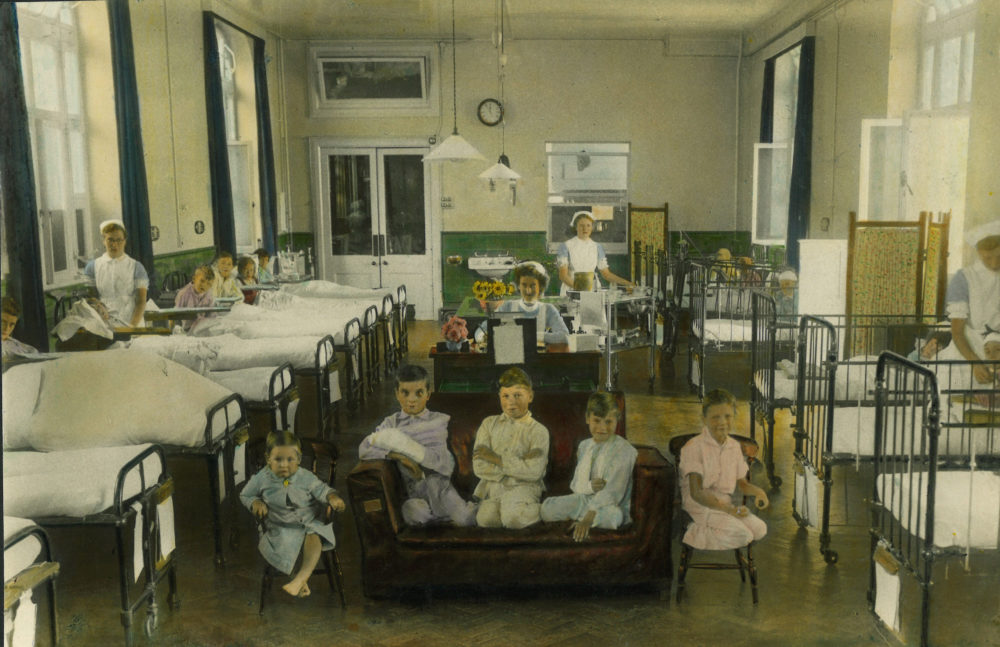
Royal Alexandra Children’s Hospital, 1940s
A colourised photography of a children’s ward in Royal Alexandra Hospital, which is now part of Royal Sussex County Hospital. A group of young inpatients are posing in their pyjamas on a sofa placed in the centre of the room for the occasion, surrounded by nursing staff tending to their duties.
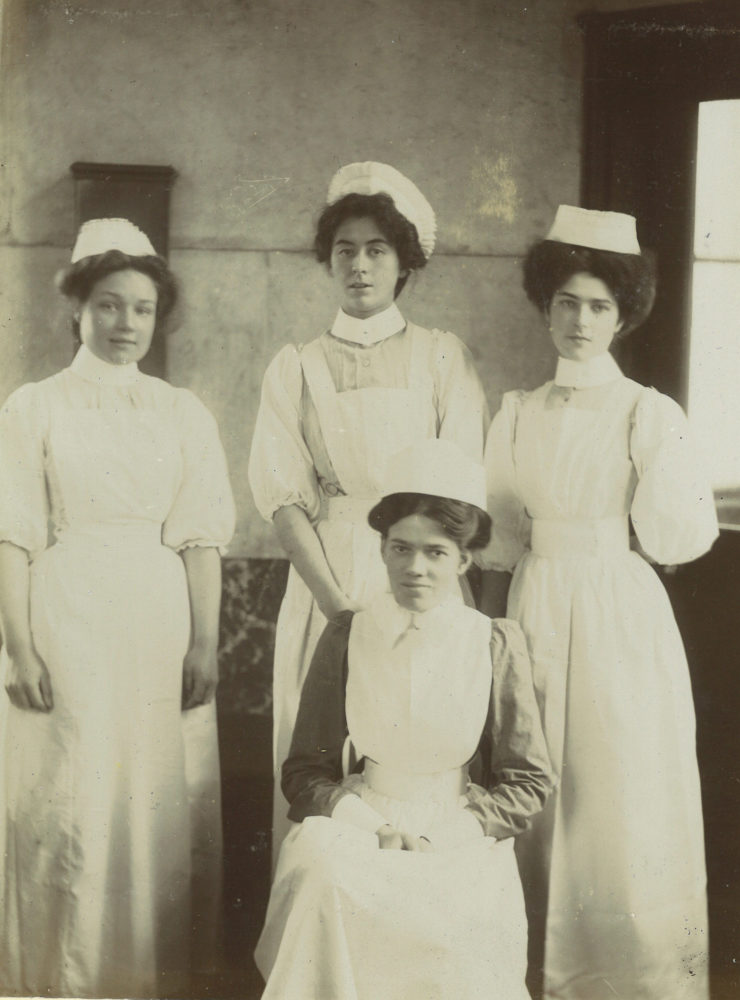
Nurses, c. 1900
Four young nurses posing in immaculate uniforms, with starched aprons and caps. Their uniforms are still quite similar to the one that was designed by a student of Florence Nightingale, and which would not change significantly until closer to WW1. This group portrait was taken around the turn of last century.
Image courtesy of Brighton & Sussex University Hospitals NHS Trust.
Ruby Grimshaw (in two parts)
Ruby Grimshaw (born 1939) worked as a Physiotherapist and later Superintendent Physiotherapist at Royal Sussex County Hospital 1962-2004. During this period, she also worked in Switzerland and Hong Kong, and ran antenatal classes until the cuts to services in the 1990s. Her interview is rich in detail of her work experience, differences and developments in treatment during her career, reflections on what her work meant to her, and the difference in how physiotherapists are trained then and now.
Charles Turton
Dr Charles Turton was born in East Grinstead in 1947.
Charles begins by talking about his inspirations for working in medicine, including inspirational teachers and a grandmother who was a radiologist.
Charles trained at King’s College London, plus studying for a BSc in Biochemistry ‘in the middle of it’. He recalls it being an enjoyable experience but the accommodation being damp. He decided early on that he wanted to do medicine rather than surgery.
He was first employed at King’s College Hospital, pre-registration house officer, then at The Brompton (International Chest Centre). He remembers there being ‘inspirational people there’, and being determined to do chest medicine. Series of training jobs in London then Brighton.
Became a consultant at Royal Sussex County Hospital in 1981. Remembers many interesting colleagues, including Tony Trafford who took a significant role in treating casualties in the 1984 Brighton bombing of the Conservative Party conference.
He talks about the development of his career, how he was drawn into management, and becoming a consultant member of the Health Authority. He then became first Clinical Director for Medicine, and later Trust Medical Director. He talks about being ‘hugely proud’ of Royal Sussex County Hospital.
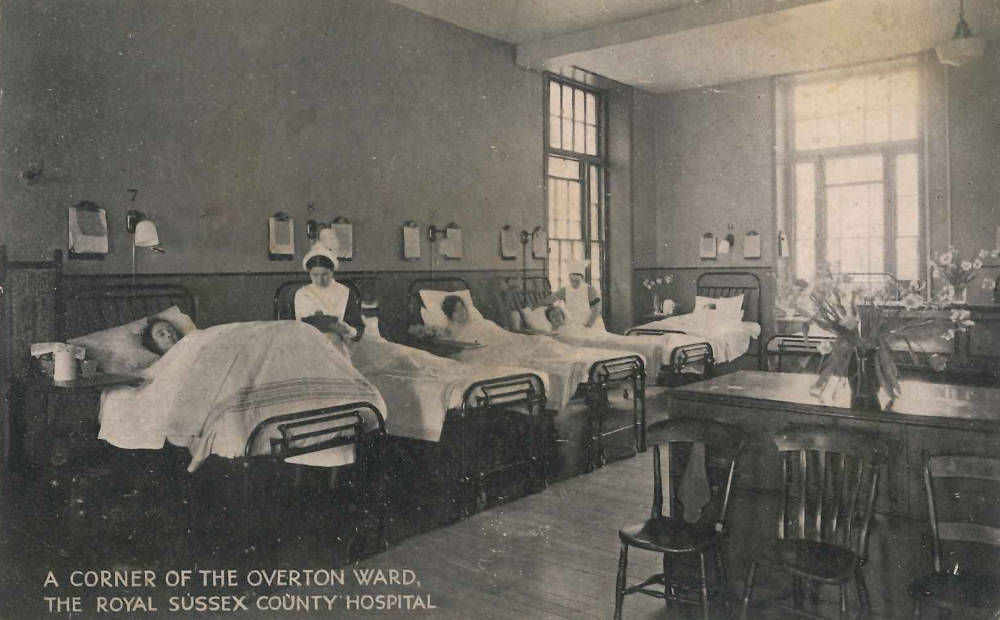
Overton Ward, circa 1912
Overton Ward was opened as part of the newly built Victoria Wing in June 1839, as part of the extension to the Barry Building. The interiors were plainly decorated with simple fireplaces and slender cast iron columns supporting the large open wards.
This early 20th century photograph (circa 1912) shows the ward, probably not much changed from when originally opened, and provides a good indication of the layout. The photo shows the original sash windows still in place, though new glass gas lamps and wooden floors had been installed. These teak and oak floorboards replaced earlier deal board floors and coconut matting and were installed in the 1890s.
Image courtesy of Brighton & Sussex University NHS Hospitals Trust.
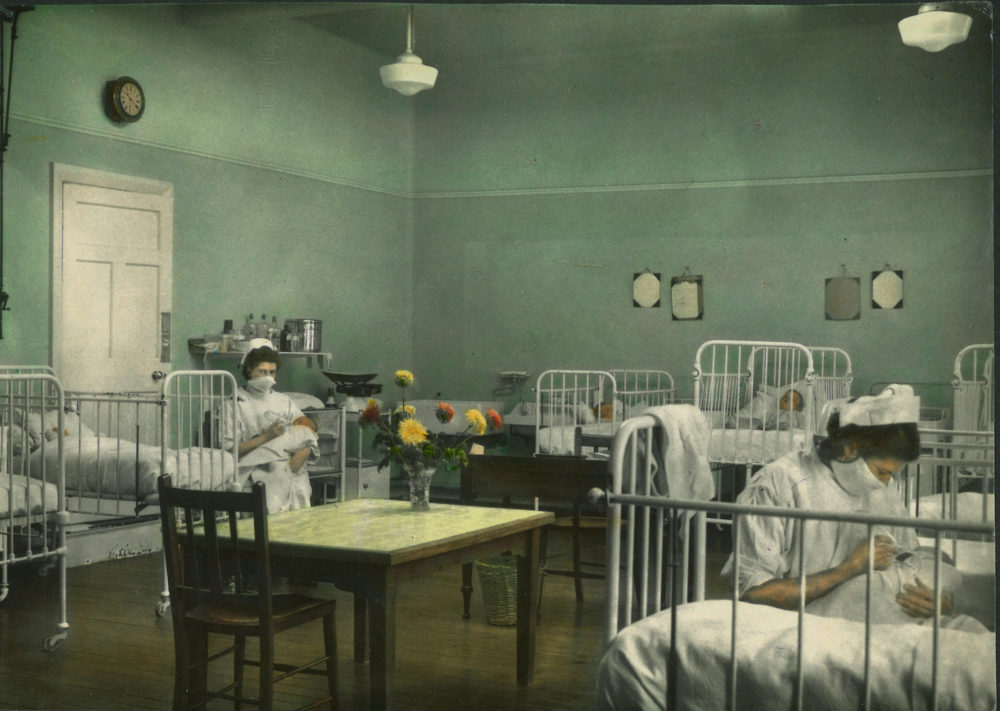
Paediatric ward, Royal Alexandra Hospital, 1940s
A beautifully colourised photograph of an infant’s ward at Royal Alexandra Hospital, now part of Royal Sussex County Hospital. The photograph shows nurses, equipped with face masks to protect the young patients from respiratory infections, bottle-feeding and tending to infants.
The hospital has seen extraordinary change since it opened as Sussex County Hospital and General Sea-Bathing Infirmary. Population growth, technological and medical advances but also social improvement has taken great leaps. When the hospital first opened, life expectancy in the UK was just over 40 years – in no small part due to very high infant mortality.
From the late 19th century onward, immunisation and better healthcare for children rapidly raised life expectancy.
Image courtesy of Brighton & Sussex University Hospitals NHS Trust.
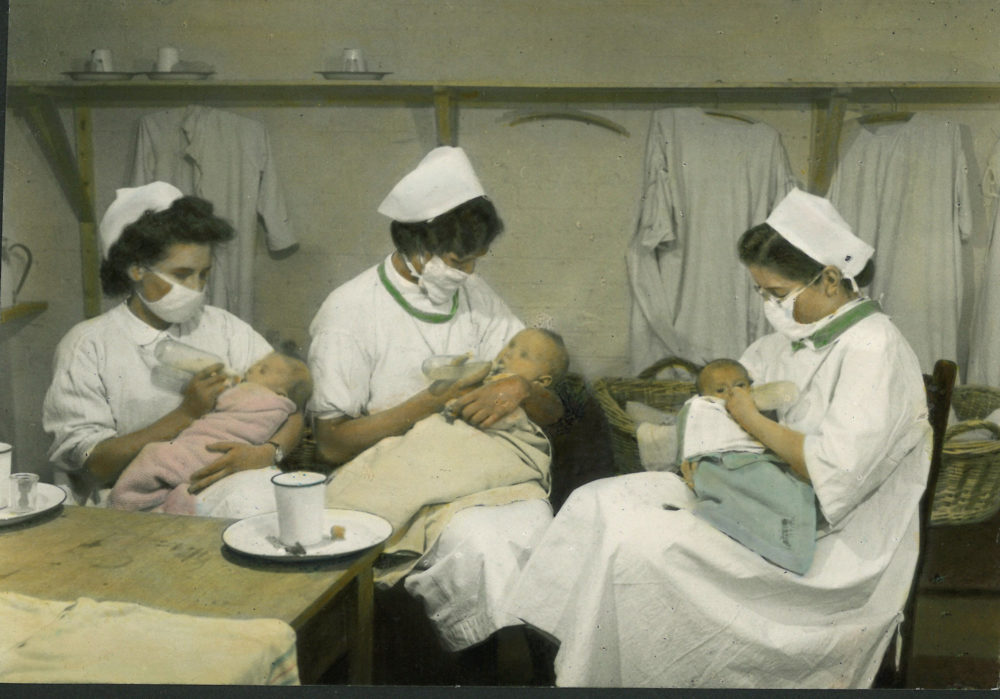
Feeding babies, Royal Alexandra Hospital, 1940s
A colourised photograph of three nurses bottle-feeding infants at the Royal Alexandra Hospital, 1940s. The nurses wear face masks to protect the babies from respiratory infections, and we can see a row of Moses baskets for the young patients in the background.
Image courtesy of Brighton & Sussex University Hospitals NHS Trust.
Mike Stanbridge
Mike (Michael) Ivan Stanbridge was born in Hackney, London in 1936. Mike recalls his first time in a hospital was when he was around five years old, after breaking his arm falling off a bicycle. He remembers having fun on the children’s ward and being there for three weeks.
He was admitted to Royal Sussex County Hospital following a heart attack in 2017. He was treated with a quadruple bypass. Mike recounts his experience of having an ECG, and the process leading up to the surgery, including consultations with surgeons.
Mike says the food in hospital was adequate, with a variety of choices including lots of vegetables.
Recorded on 24/08/2019, Brighton, UK.
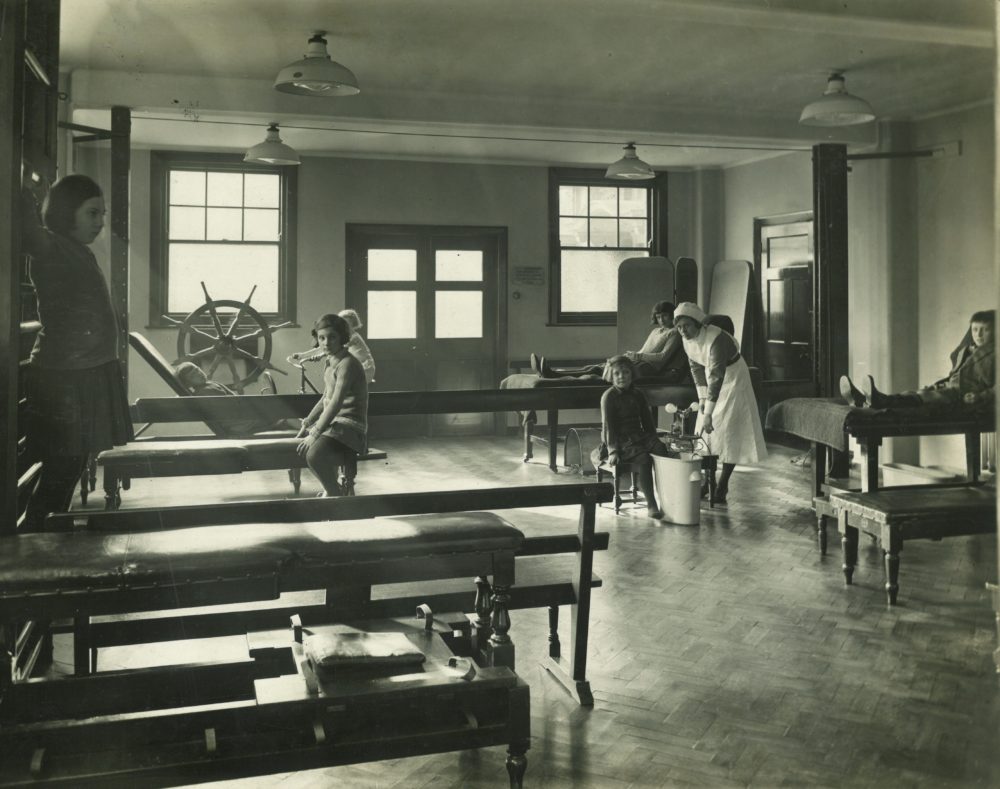
Physiotherapy gym, Royal Alexandra Hospital, 1920s
Photograph of the physiotherapy gym at The Royal Alexandra Children’s Hospital from an exquisite collection of silver gelatine prints, showing contemporary gym equipment and some of the young patients. Archived at The Keep.
Image courtesy of Brighton & Sussex University Hospitals NHS Trust.
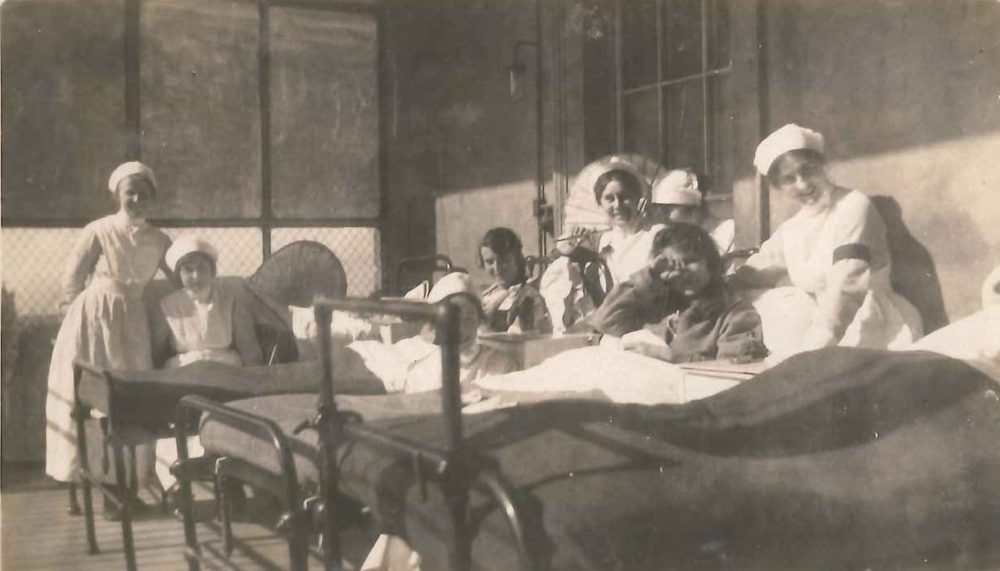
Women’s ward at Royal Sussex County Hospital, 1910s
Uniformed nurses and female patients at the women’s ward of Royal Sussex County Hospital in the decade before WW1. The original photograph is archived at The Keep.
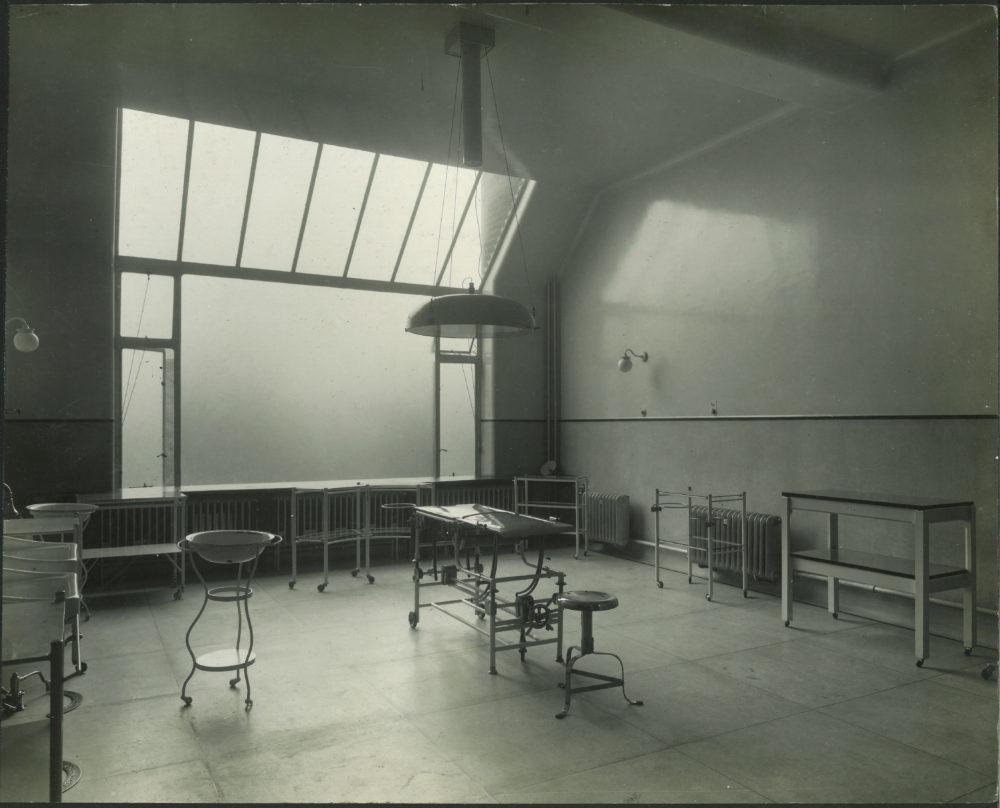
Surgical theatre, c. 1910
Photograph of an empty surgical theatre at the Royal Alexandra Hospital, now part of Royal Sussex County Hospital, c. 1910. The large windows emphasise the role that sunlight played in good hospital care at the time. The bare surfaces we see on simple frames with coasters – so that they could be moved as needed – allowed for sterilisation.
Here, as well as in many other photos from the time, we see the value placed on air and sunlight for infection control.
Image courtesy of Brighton & Sussex University Hospitals NHS Trust.
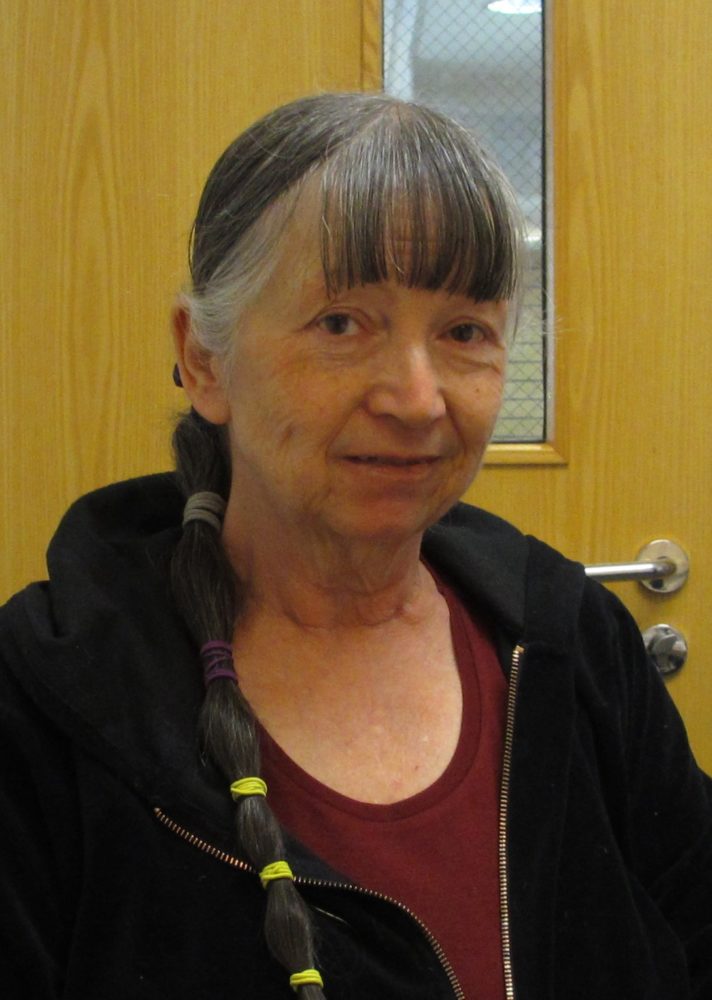
Mary Funnell
Mary Funnell was born in Brighton in 1953. She worked as an Auxiliary Nurse on the Maternity Unit of the Royal Sussex County Hospital from the mid-1970s to the mid-1980s.
She recalls her experiences of working there, including the daily work routine, how she cared for babies, interactions with colleagues, descriptions of the uniform, and witnessing the aftermath of the Brighton Bombings. She briefly recalls being a patient when she had her tonsils out.
Recorded on 15/10/2019, Brighton, UK
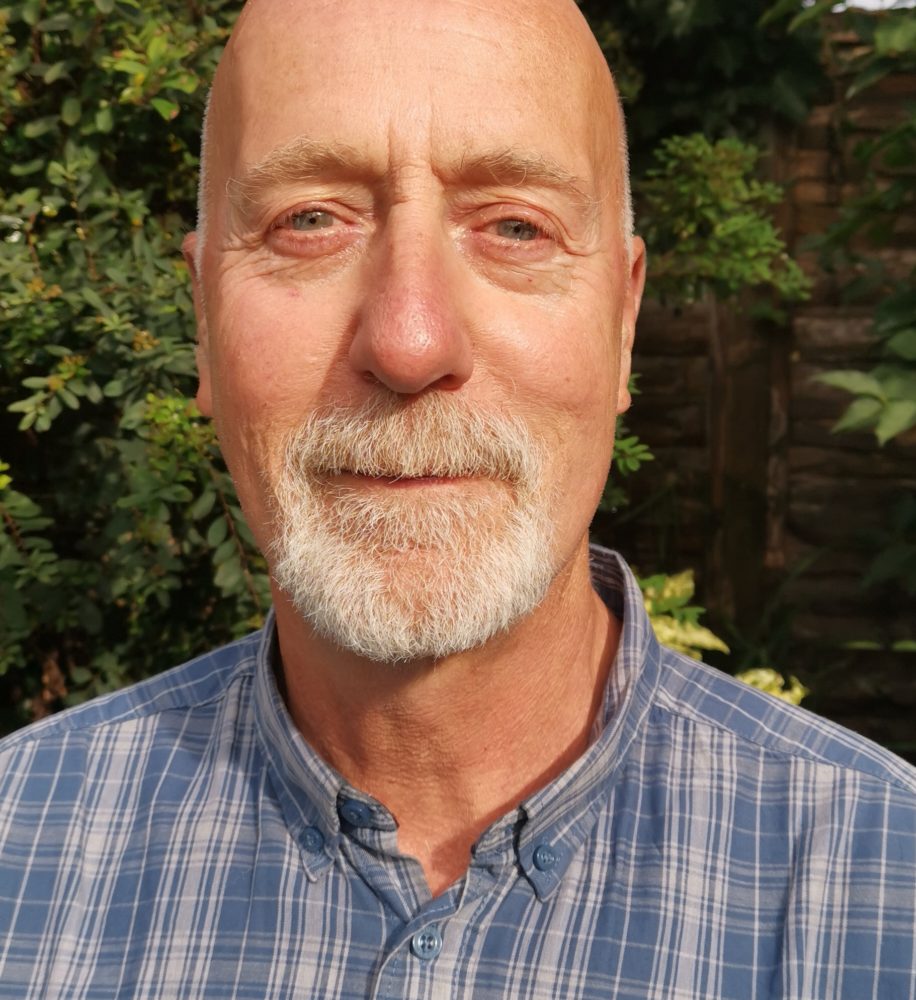
Richard Spong
Richard Spong was born in 1953, Windlesham, Surrey, and has lived in Hove since 2007.
Richard was admitted to A&E at Royal Sussex County Hospital after fainting on the kitchen floor at home. Following scans, Richard was diagnosed with having a very rare condition, a tumour on his pituitary gland known as Adenoma.
Richard talks about the various procedures that were undertaken at the hospital, including CAT scan, lumbar puncture and various blood tests, plus his stays on different wards.
Being moved around to different parts of the hospital made quite an impression. The Respiratory Ward was Victorian in design with very high windows and when the wind was blowing in the wrong direction there were ghostly howls. The driving rain from the south west hammered at the windows, and was atmospheric. When possible, his wife would go with him because he was still suffering from confusion. He talks about wandering around some of the oldest parts of the hospital. The corridors contained old historical records from years ago.
He says he is a bit evangelical about the need for the NHS. He says in general people are complacent about their health and don’t realise the impact of a life changing condition and the importance of the NHS. Perhaps, if they were exposed to the American medical system, they may realise how fortunate they are and how important the NHS is.
Recorded on 19/07/19, Brighton, UK
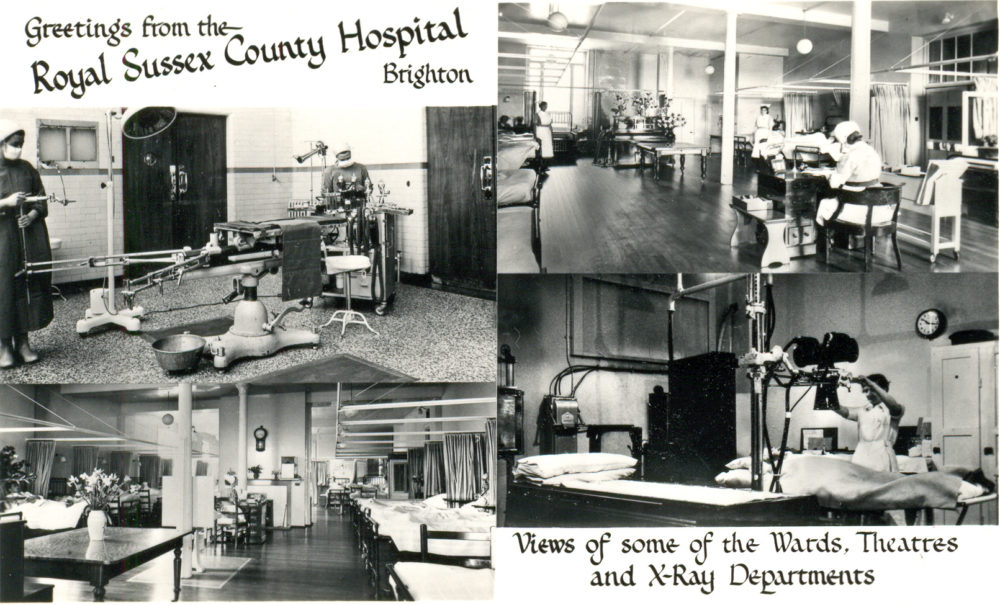
X-Ray department, ward and theatres postcard, circa 1924
In 1920, a £2,000 grant was provided by the Joint War Committee of the Red Cross and Order of St. John, which contributed to the construction of a new Orthopaedic and X-Ray Department. Plans were drawn up by Cawthorn from 1922-3, and James Barnes & Sons were appointed contractors. Detailed drawings for the steel windows in the building were provided by Henry Hope & Sons of Smethwick.
The new department was comprised of converted rooms at the east end of the hospital, a new single storey brick building in the space between the Adelaide and Stewart Wings, which was to form the X-Ray department and a link to the main building.
The department was formally opened in December 1923 with orthopaedic equipment and new electro-cardiographic equipment installed.
Image courtesy of Brighton & Sussex University Hospitals NHS Trust.
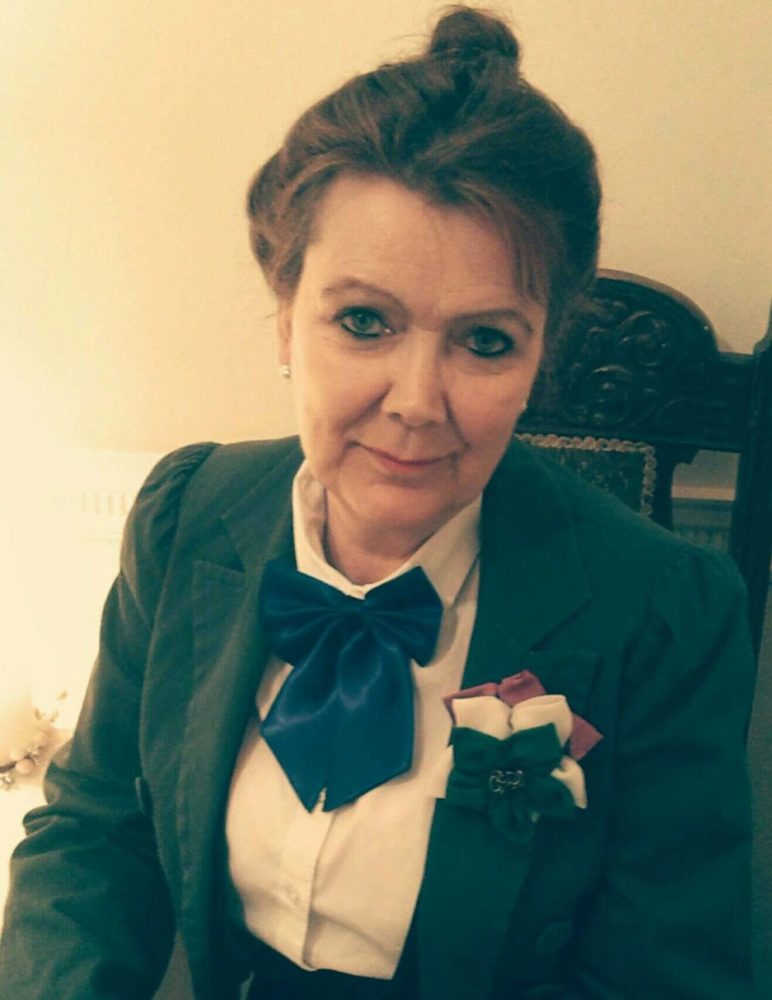
Glenys Horton
Glenys Myfanwy Horton was born in Birmingham in 1958. She decided to study nursing, following in the footsteps of her best friend.
Glenys begins by talking about her early life, her home life, then about the training as a nurse, which she felt when she trained was very practical compared to academic training today.
She talks about her recent experience of being a patient, following major surgery. She recalls her training days, exams, the quality of the training and her early experiences as a nurse and through her career.
Recorded on 24/07/2019 in Brighton, UK.
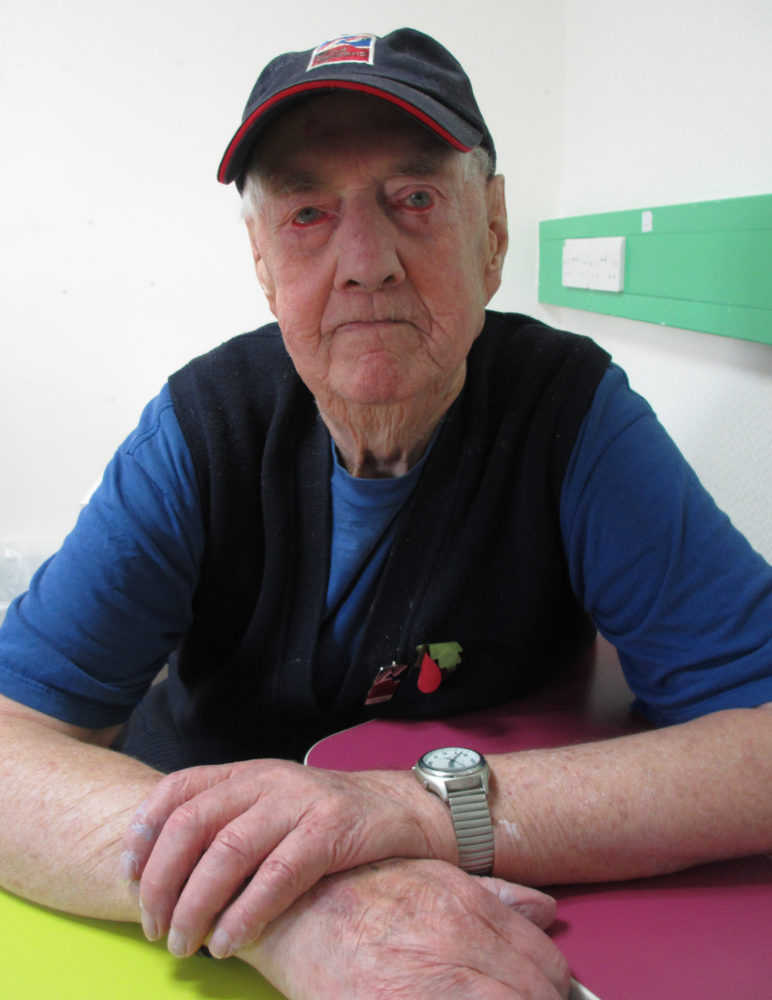
Peter Saunter
Peter Saunter started working at Royal Sussex County Hospital at the age of 57. His wife also came to work there for a period, when she was volunteering for the WRVS (the Royal Voluntary Service welfare branch). The camaraderie between the porters, and between the porters and other staff, from nurses to surgeons, are key themes in Peter’s interview. Several memories describe funny incidents involving staff and porters, and in one, Peter talks about a patient who laughed so hard they fell out of bed.
Peter had a telescope that his colleagues, even surgeons, used to survey the surrounding area. He describes how consultants and surgeons looked after the other staff as well as their patients – on one occasion, a surgeon diagnosed a surgery that Peter needed while busy with a patient, and consultants were generally very kind to staff when they were ill.
In 1984, at the time of the Brighton bombings, Peter ran the crew of porters. Afterwards, he received a letter from Margaret Thatcher thanking him for what he did during the bombing incident.
Peter’s only complaints was about the food, which he says was not very nice – if he were in charge, this is the first thing he would change.
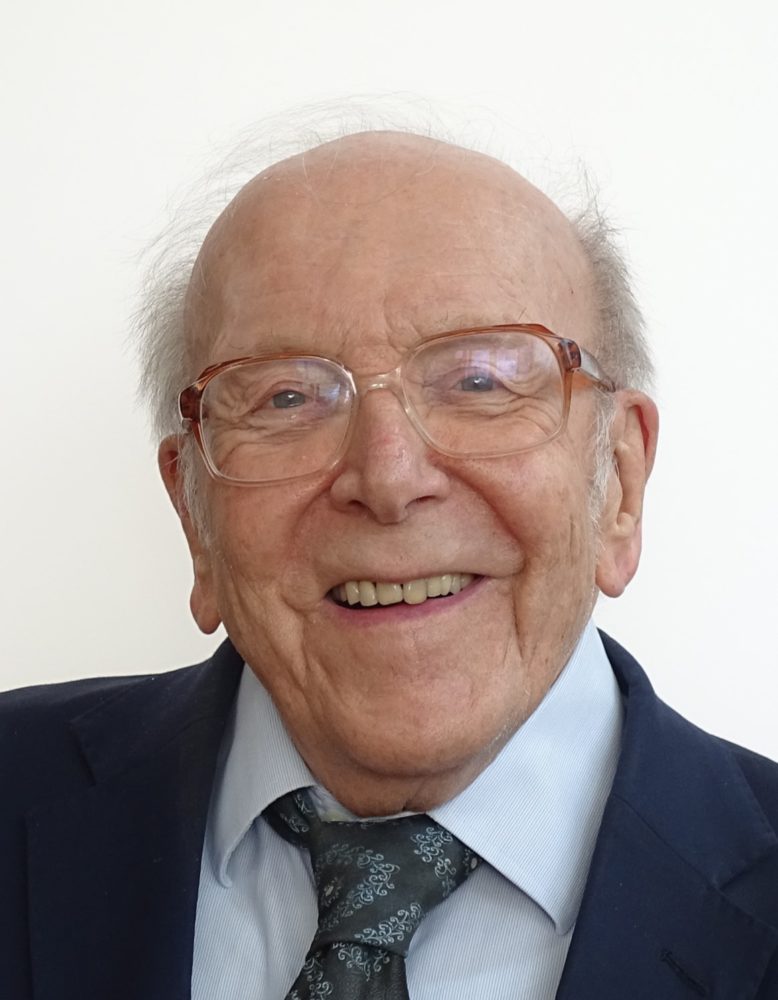
Douglas Chamberlain
Dr Douglas Chamberlain was born in Cardiff, Wales in 1931.
Douglas talks about his inspiration for working in medicine, and his route into medicine – training at Queen’s College, Cambridge in 1950, followed by St Bartholomew’s Hospital (1953-56).
After qualifying, he worked for six months at country branch of National Heart Hospital and six months at Royal United Hospital, Bath. Spent a year in Massachusetts General Hospital, Boston for 1 year (1968). A short spell at Brompton Hospital then cardiology department at St Bart’s where he became involved in research on beta-blockers with ICI.
Douglas talks further about his career, including working in Brighton, how doctors would do their own management and administration, evolution of treatment methods and impact of the job on his personal life.
Recorded on 05/10/2019 in Brighton, UK.
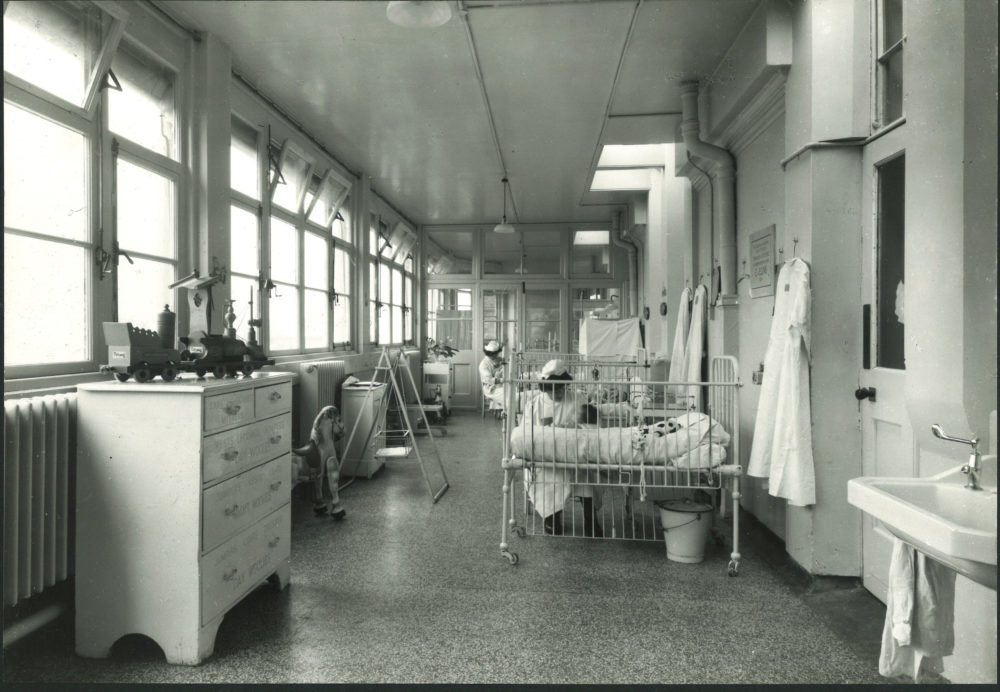
Paediatric ward, Royal Alexandra Hospital
This photograph of a paediatric ward at the Royal Alexandra Hospital, which is now a part of the Royal Sussex County Hospital, shows a row of cots exposed to sunlight from a row of large windows, a chest of drawers with wooden toys, and a nurse in the distance. The photo is taken in the inter-war period, before the discovery of penicillin, and sunlight was an important part of fighting tuberculosis and other infectious diseases.
Image courtesy of Brighton & Sussex University Hospitals NHS Trust.
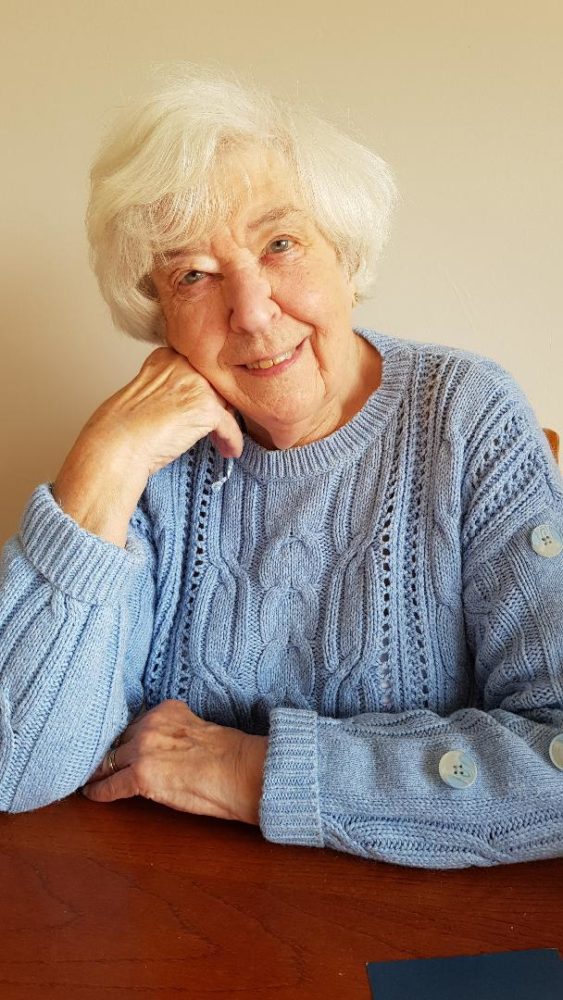
Betty Field
Betty Field was born in Brighton in 1932. Betty says her earliest memory of Royal Sussex County Hospital was going to the Barry Building as a four-year-old with her grandmother who had fractured her skull.
She recalls visiting the hospital at the time of the D Day landings with her father to try and find a young Canadian airman who was a friend of the family. She remembers seeing wounded men lying on the floor of the hospital with blood and gore, aged eight-years-old.
Other memories include taking her sons to hospital after accidents in 1957, being confined to hospital with pre-eclampsia and kidney infections, giving birth, making her own yellow silk nightgowns and hysterectomy.
Recorded on 05/11/2019 in Brighton, UK.
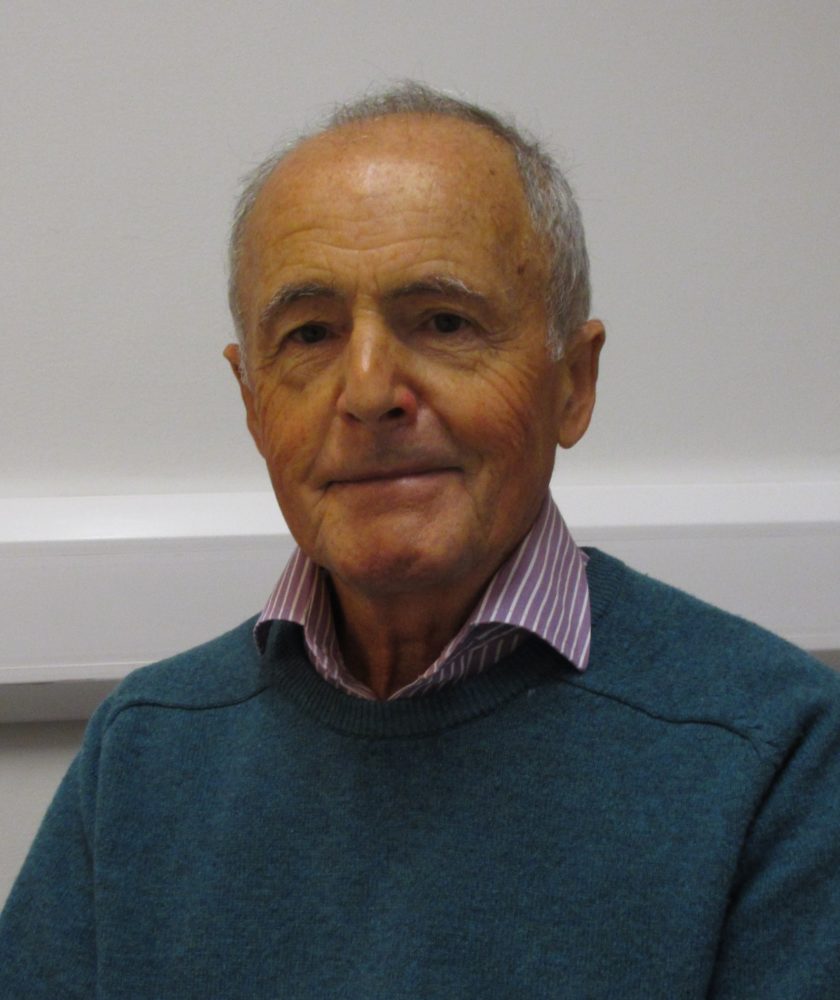
Ken Broomfield
Ken Broomfield was born in Edinburgh in 1943. Ken was a Patient at Sussex Eye Hospital and Royal Sussex County Hospital, and the Royal Alexandra Hospital for Sick Children in the 1940s.
He describes having regular check-ups at the eye hospital and being diagnosed with a weak eye around the age of four. He talks about the process of checking children’s eyes if a child didn’t yet know the alphabet.
Ken recollects his time in the Royal Alexandra Hospital for Sick Children due to removal of tonsils and adenoids, and compares the difference between being treated in the present and as a child mid-20th century.
Recorded on 07/10/2019 in Brighton, UK.
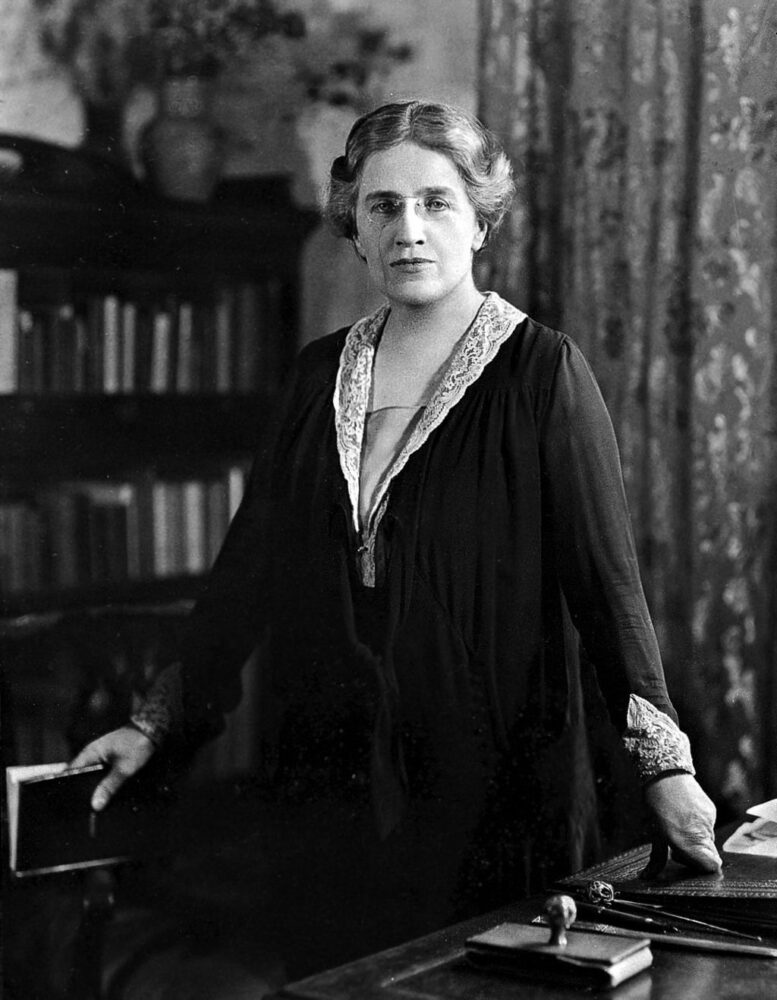
Louisa Martindale
Dr Louisa Martindale, to whom the Royal Sussex County Hospital building where Crucible is situated is dedicated, was a pioneer for women in medicine and lived a long life, rich in achievements. She embodies the idea of healthcare as a crucible for social change.
Born in Leytonstone in 1872, she moved with her family to Brighton in 1885 to attend the Brighton High School for Girls together with her sister, Hilda Martindale (born 1875). Prior to moving to Brighton, the family lived in Cornwall, Germany, Switzerland and Lewes. Louisa’s mother was an active suffragist, and both daughters went on to establish themselves in professions that were then almost completely dominated by men.
Louisa knew from a young age that she wanted to be a doctor, and attended Royal Holloway and London School of Medicine for Women after her education at the Brighton High School for Girls. She was awarded her Doctorate in Medicine in 1906 and subsequently returned to Brighton, where she started her own General Practice as the city’s first female GP . She joined the Lewes Road Dispensary for Women and Children (which became the Lady Chichester Hospital in 1911). Dr Martindale was instrumental in transforming the Lady Chichester Hospital into the New Sussex Hospital for Women – staffed entirely by women – on Windlesham Road in 1921, where she was Senior Surgeon and Physician until 1937.
Louisa Martindale moved to London in 1922 as Consultant Surgeon but continued to work at the New Sussex Hospital. In London, she became honorary surgeon at the Marie Curie Hospital. In 1931, she was elected President of the Medical Women’s Federation and was awarded a C.B.E. In 1933, Dr Louisa Martindale was made a Fellow of the Royal College of Obstetricians and Gynaecologists and in 1937, appointed to the Council of the Royal College of Obstetricians and Gynecologists as the first woman member in history.
She pioneered early treatment of cervical cancer, uterine cancer and fibroid growths with intensive X-ray therapy, researched venereal disease, carried out over 7,000 operations, served in France in WW1 with the Scottish Women’s Hospitals, and as a surgeon in London during WW2. She was an active member of the Brighton Women’s Franchise Society, served as Magistrate for many years on the Brighton bench, was a Prison Commissioner and a member of the National Council of Women. She retired in 1947 and told the story of her extraordinary career and personal life with Ismay FitzGerald, daughter of Baron FitzGerald of Kilmarnock (1875–1946) in her autobiography A Woman Surgeon, published in 1951 by Gollancz in London.
56 years after Dr Martindale’s death in 1966 (at the age of 93), the decision was made to name the new development at the Royal Sussex County Hospital after her.

Louise Wells
Louise Wells was born in 1975, Dumfries, South West of Scotland. She has lived in Brighton since 2007. Louise talks about her experience of treatment following a spontaneous cerebrospinal fluid leak in 2015, both at Hurstwood Park and Royal Sussex County Hospital.
She recalls the different investigations that took place, including MRI and CT scans, and treatments including anti-clotting injections, which felt like bee stings.
While receiving treatment, patients were moved from the Neurology Inpatients Unit from Hurstwood Park to Royal Sussex County Hospital (RSCH). She says she was sad to leave Hurstwood Park because it felt much more like home, more private and you felt more like an individual.
She recalls the porters at the RSCH being humorous. Having a lot of banter. She says this took her mind off being the focus of attention, which was a welcome relief.
Recorded on 19/07/2019 in Brighton, UK.
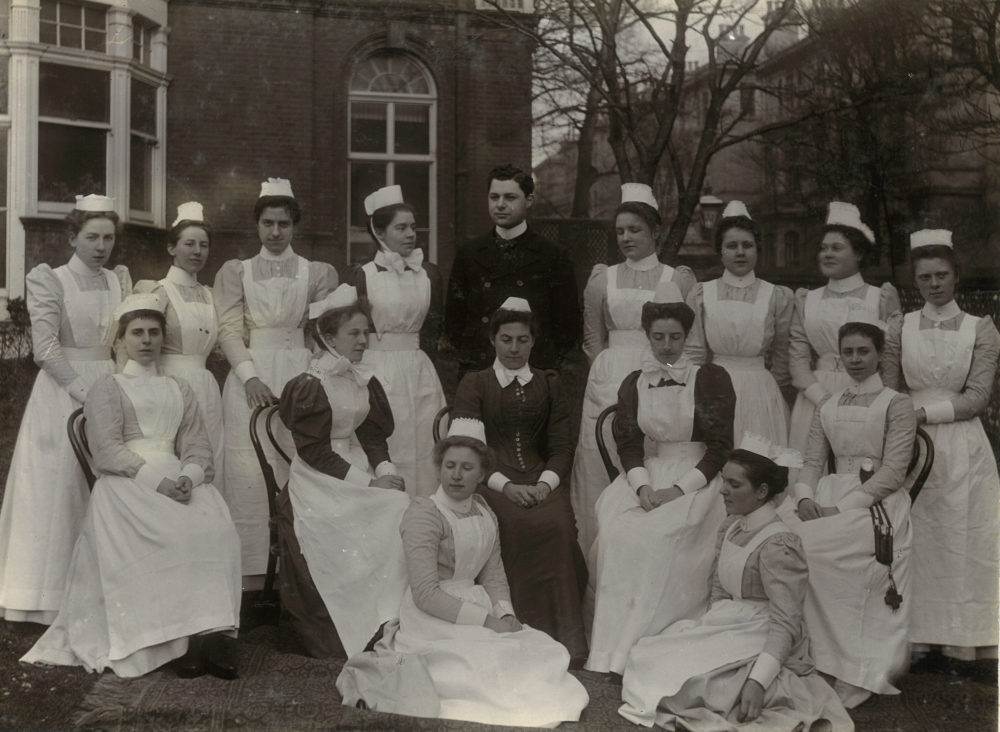
Hospital staff, c. 1900
Here we see how uniforms (and the day clothes of the physician) show rank, with the nursing staff in light-coloured dress underneath the apron, and darker colours marking seniority. Matron does not wear an apron, and is seated centrally in front of the physician, who is wearing normal day gentleman’s day clothes. Nursing uniforms are still quite similar to the original model designed by a student of Florence Nightingale.
Image courtesy of Brighton & Sussex University Hospitals NHS Trust.
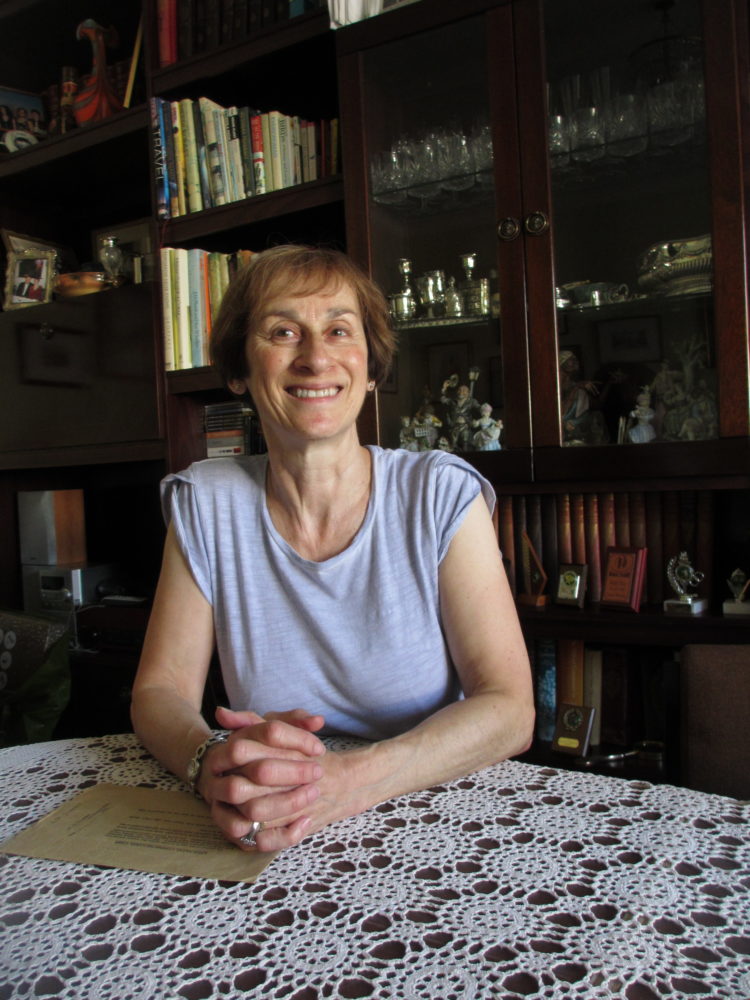
Ruth Simmons
Ruth Simmons (born 1954) gave birth at the Royal Sussex County Hospital in 1980, and talks about the days leading up to the birth of her second child, and her stay at the hospital. Including a description of prenatal care, her experiences during labour, and what it was like staying at the hospital. Plus the difference in the amount of paperwork you had to do and the relative lack of choices in comparison with the present day. Ruth is now a volunteer at the hospital, and describes what that means to her.
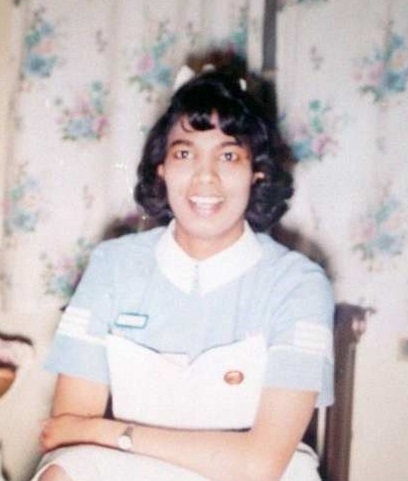
Shirley Roopwarti Williams
Shirley Williams was born and educated in Guyana, South America, and moved to Britain in 1961, where she commenced staff nurse training at Brighton General Hospital for three years. She moved to London for a year to undertake midwifery training before returning to Brighton.
Shirley talks about her first impressions of Brighton General Hospital, it being like a maze and unnerving, and having to get hold of her nerves.
She also talks about meeting her husband at the hospital, who worked in catering, and had two sisters who were also nurses living at the nurse home on the hospital site.
Recorded on 14/09/20, Brighton, UK
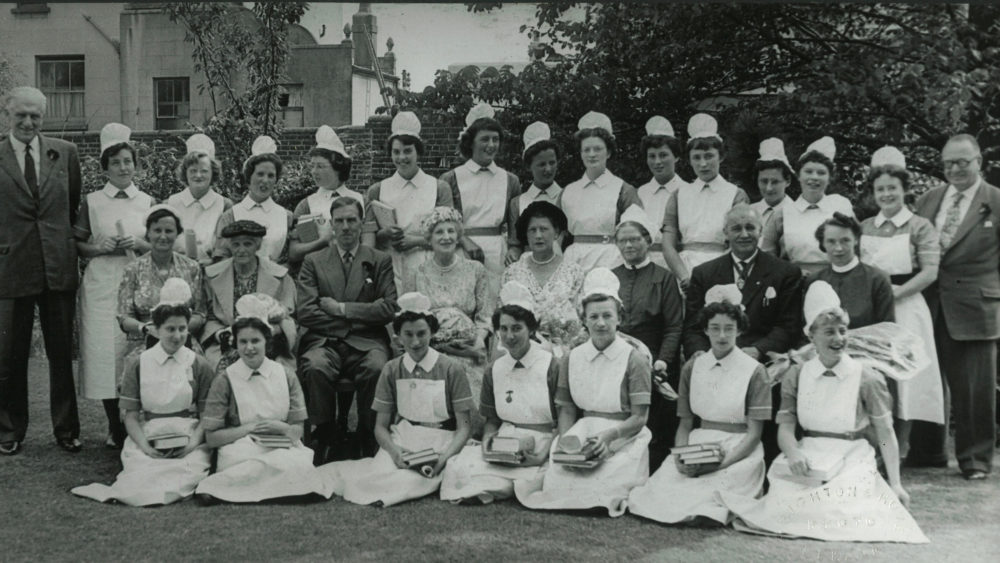
Hospital staff, 1950s
The formality of earlier group portraits is somewhat eased here, with nurses showing more of their personalities in the photo. The iconic white aprons and starched caps of the national nursing uniform that was introduced when the NHS was established is worn by nursing staff, while physicians can be seen in day clothes typical of gentlemen at the time. Visiting benefactors in afternoon dress are centrally seated in the photograph, flanked by Matron and a young physician.
Image courtesy of Brighton & Sussex University Hospitals NHS Trust.
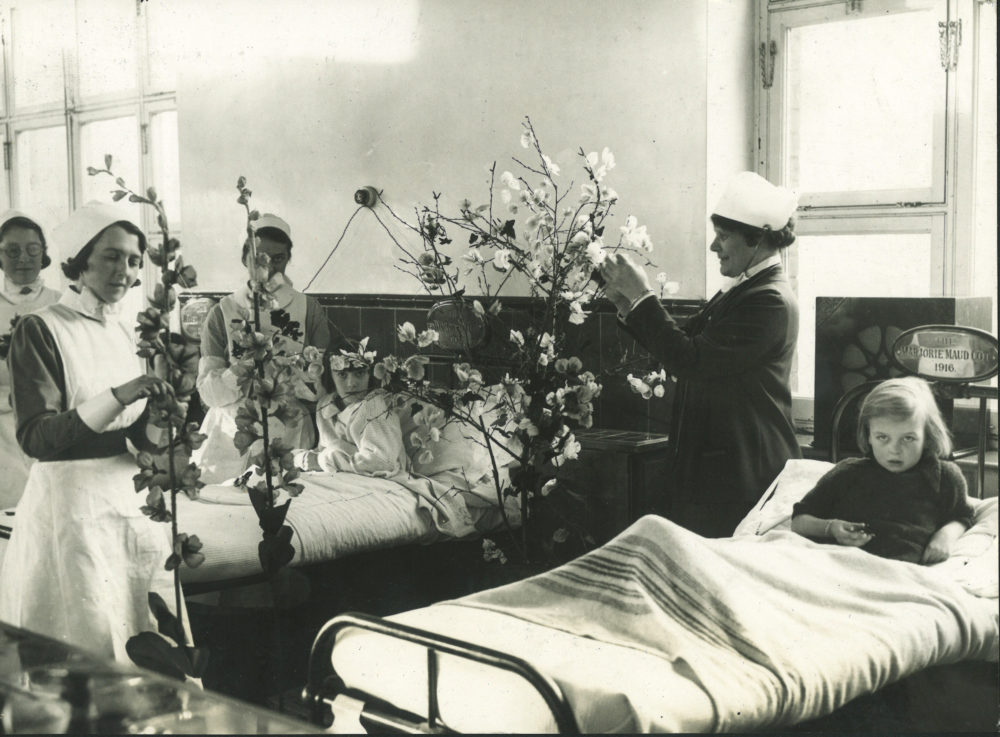
Decorating a children’s ward with fresh flowers, 1920s
Nurses decorating a children’s ward at Royal Alexandra Hospital, now part of Royal Sussex County Hospital, with fresh flowers for a spring holiday, 1920s. The young patients look more curious about the photographer than the efforts of the nurses.
Image courtesy of Brighton & Sussex University Hospitals NHS Trust.
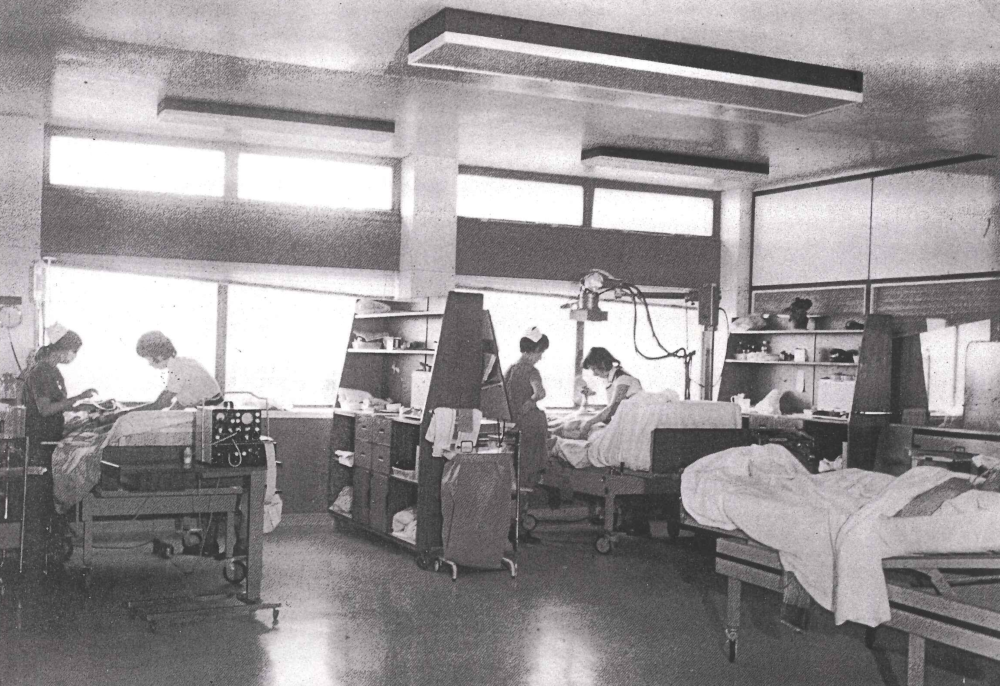
Intensive Care Unit at Royal Sussex County Hospital, 1980
An image of Intensive Care in Thomas Kemp Tower from 1980. Thomas Kemp Tower was built in the 1960s, greatly increasing the hospital’s capacity. The structure towers over the original 19th century buildings, adding density and scale to the hospital’s development.
The 1980s saw the first influx of patients into ICU with HIV, which was affecting and taking the lives of many young men in Brighton. In the 1980s, HIV infection had a high morbidity, sometimes leading to admission to ICU with very poor survival. Due to this, there was an early perception that admission to ICU was associated with a poor outcome for those with HIV infection.
Since the 1980s and into the 21st century, Royal Sussex County Hospital has pioneered care and treatment for people with HIV, developing an international reputation for care and research, becoming a leading centre for HIV care in the UK.
Image courtesy of Brighton & Sussex University Hospitals NHS Trust.
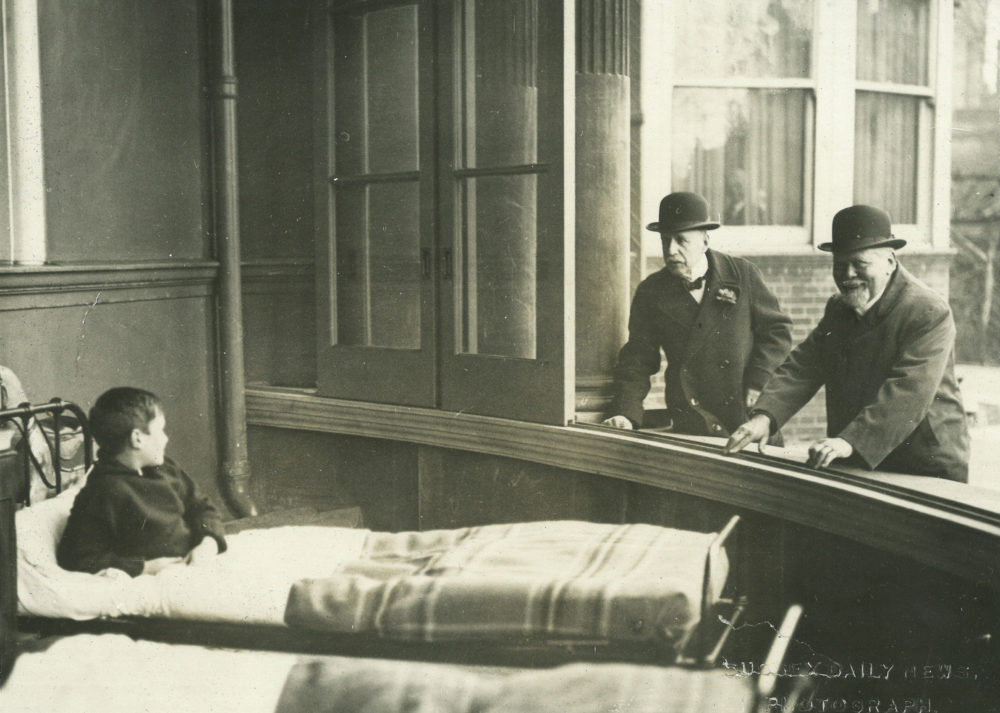
Royal Alexandra Hospital, a breath of fresh air, c. 1900
A young patient at the Royal Alexandra Hospital, now part of Royal Sussex County Hospital, having a light-hearted conversation with two gentlemen through the open windows, allowing him exposure to fresh air and sunshine. This was regarded as key parts of prevention and treatment of airborne infections such as influenza and tuberculosis. They also reduced the spread of smallpox, but at this time (c. 1900) Copeman vaccination against smallpox was more or less compulsory.
With Covid-19, the effectiveness of ventilation to reduce risk of infection from airborne pathogens has yet again been shown.
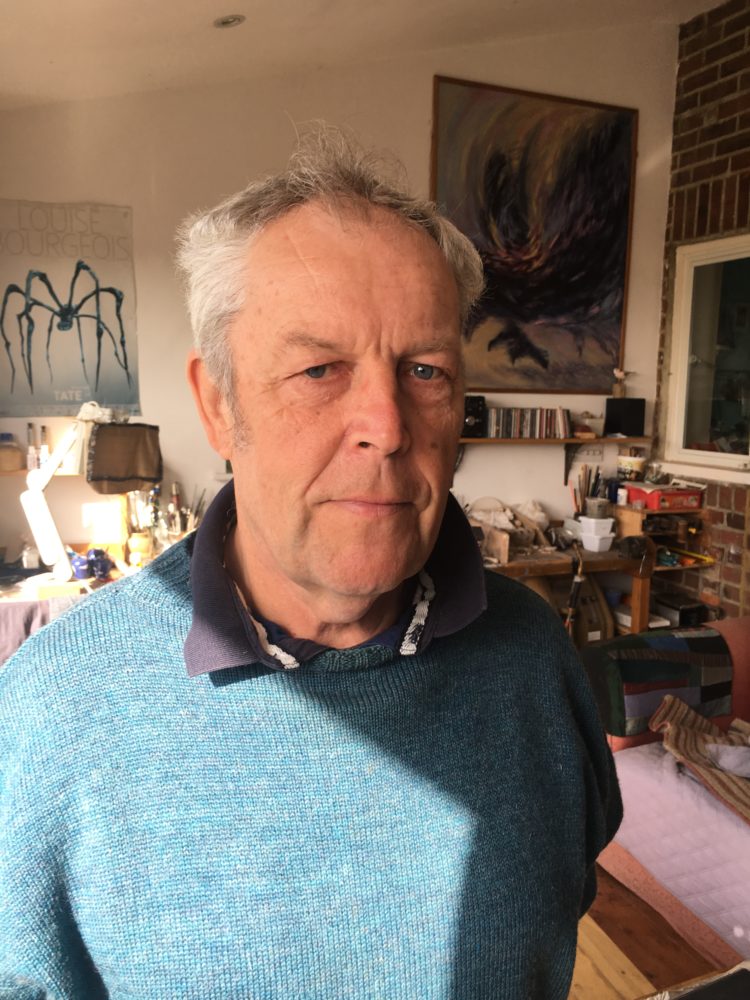
Chris Heape
Chris Heape was born in Paddington, London in 1947.
Chris talks about how he became interested in being a radiographer, recalling that he was allowed to sit in on radiography work in Torbay Hospital, and encouraged to take his interest further, culminating in a degree course in Plymouth.
Chris talks about his first job as a locum in Torbay hospital progressing to a job in Brighton. He talks about his memories from the late 1990s, when he started at Royal Sussex County Hospital. He remembers being both on rota and on call, sometimes working 17-hour shifts where he slept in the hospital. X-rays could take from five to 30 minutes depending on the examination. He recalls one operation that went on all day and involved three radiographers.
When he started ‘wet processing’ X-rays were in use, which was followed by replacement with digital radiography, which Chris loved; he talks about how images could now be ‘altered’ and transferred (sometimes abroad) for diagnosis and meant that lower X-ray does could be used.
He recalls his experience as a patient, when he needed double bypass surgery, and says he could not fault the treatment he received.
Recorded on 10/10/2019 in Brighton, UK.
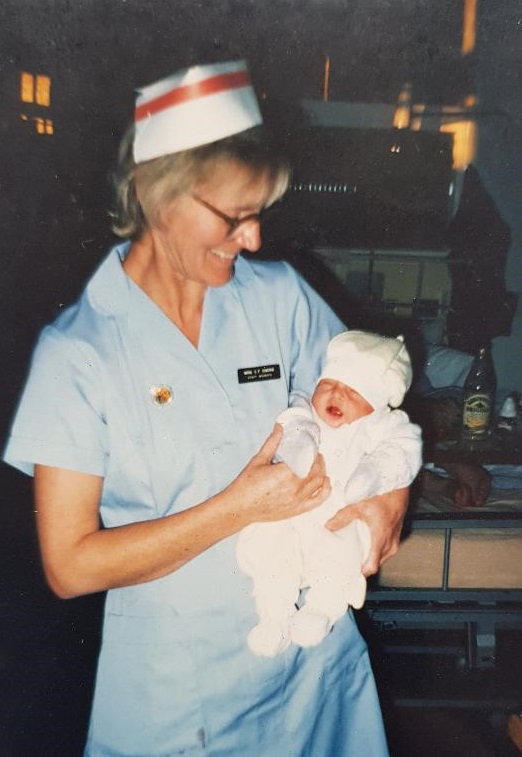
Christine Cooke
Christine Cooke was born in Chatham, Kent in 1939.
Christine talks about how she became interested in healthcare, including training at Maidstone Technical College and Maidstone General Hospital. Finished training in Canterbury, and was employed by an agency working in Brighton.
Moved to Shoreham in 1976, working at Southlands Hospital where she did general nursing and was staff nurse on the orthopaedic ward. Trained as a Midwife, 1984-86.
Christine recalls her work as a midwife, training as a student, changes in the NHS, her own stays in hospital, and working overseas including in Bangladesh, 1989-92, as a midwife and doing health visitor training.
She talks about doing a MA in Education in primary healthcare at Manchester for one year, following which she worked for Oxfam, six months in Sudan and six months in India. Period of ill-health on return from international work, which was followed by work as a Health Visitor in Shoreham and Lancing until retirement in 2012.
Recorded on 05/11/2019 in Brighton, UK.
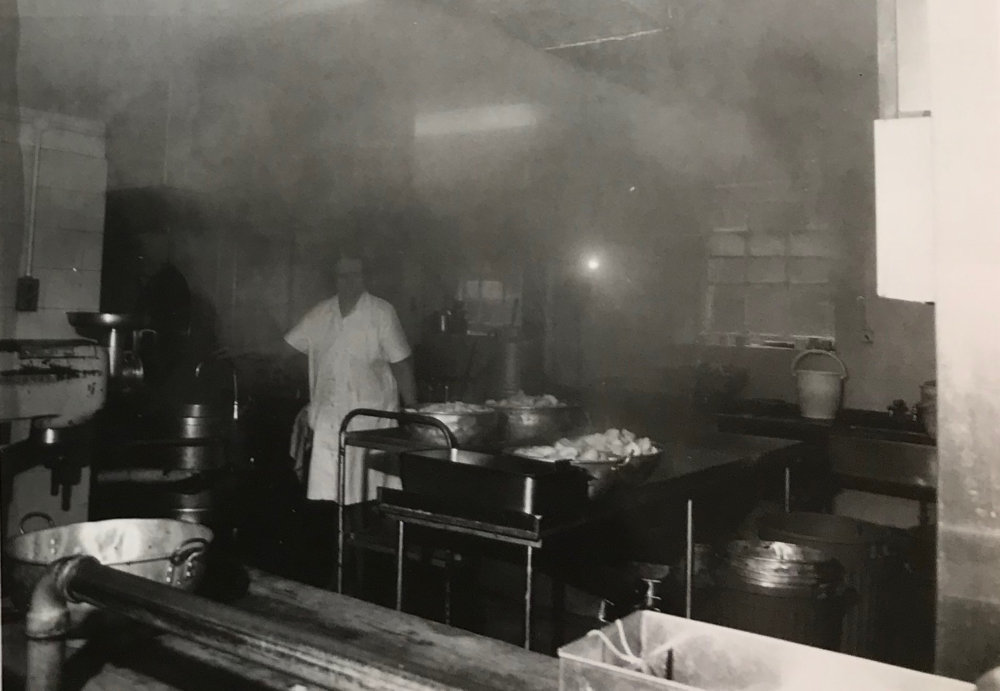
Kitchens, Royal Sussex County Hospital, 1930s
Photograph showing the kitchens, and the cook, in the basement of the Royal Sussex County Hospital. Original held in the collections at The Keep.
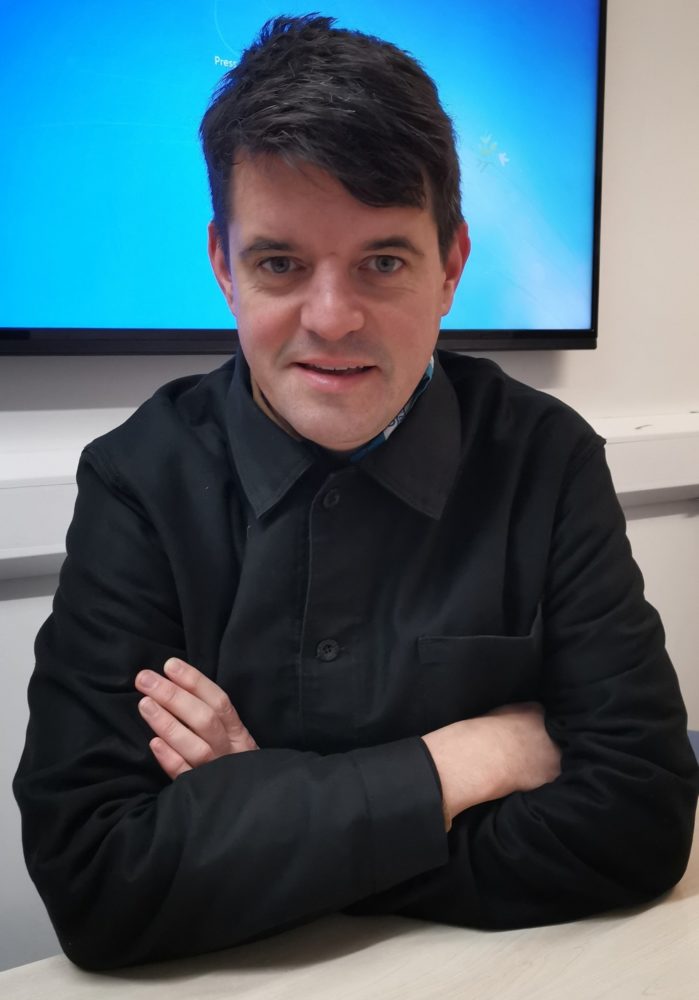
Daniel Locke
Daniel talks about his career, about his interest in engaging with patients and staff of the hospital, and more widely in his work, with scientists, to stimulate work he makes and communicate that work.
He recalls being a patient in A&E in 2019, suffering from a severe allergic reaction following being stung by a wasp. He talks about being monitored for four hours for anaphylactic shock, which can be fatal. He was treated with antihistamines and steroids, and has to now carry an epi pen. The experience has made him appreciate how important the hospital is and says how grateful he feels for it.
Daniel talks more about his experience of making the Crucible mural, speaking to staff and patients about their experiences, including the great storm in 1987, childbirth and the deaths of loved ones.
He speaks about how he feels the hospital is the history of Brighton as well. And finds it difficult to decide what should and shouldn’t be included in the mural.
Recorded on 11/12/2019 in Brighton, UK.
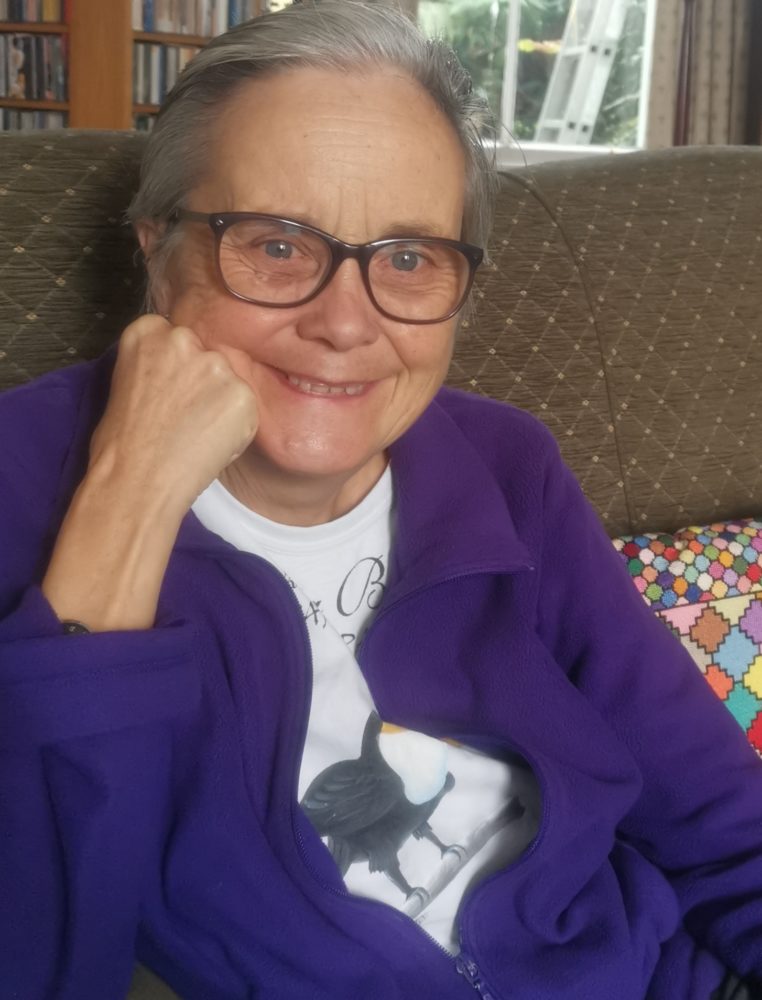
Ashley Adsett
Ashley Adsett was born in Brighton in 1952.
Ashley talks about wanting to become a nurse from the age of six, and began volunteering at Southlands Hospital, going on to training in 1970 at University College Hospital, London. She goes on to talk about her training and life in London.
She talks about her career at Royal Sussex County Hospital, including being Ward Sister on Bristol Ward, Christmas celebrations with patients, becoming Sister of the Cancer Centre, plus advancements in medicine she witnessed including keyhole surgery and treatment of cancer.
Ashley talks about donating a kidney to her brother, and how the Renal Unit was efficient, including the follow up.
She recalls winning a competition, which enabled her to visit the American Cancer Nurses Conference in USA, and also met the British Ambassador.
Recorded on 25/10/2019 in Brighton, UK.
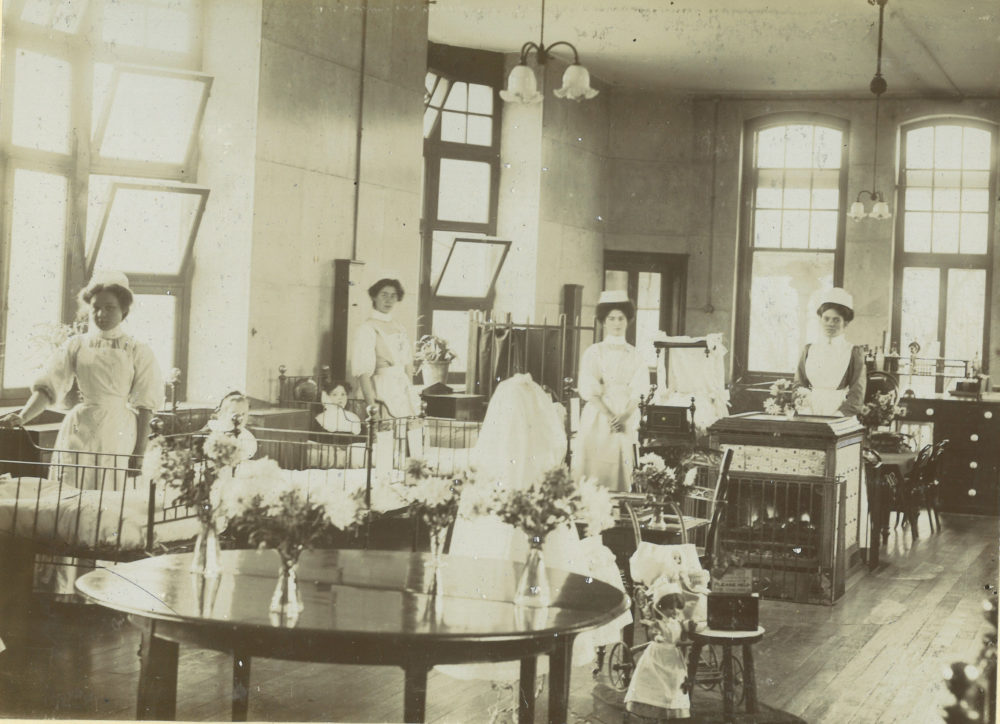
Hospital ward, 1890s
The photograph shows a spotless hospital ward in the 1890s that is decorated with flowers in vases, flawlessly polished furniture, and attended by nursing staff in crisp, white uniforms. The environment reflects the contemporary vision of best practice in healthcare, mirroring a well-to-do home environment, albeit with more daylight and less upholstery for hygienic purposes. The ceiling height and the tall windows allowed good ventilation and maximised sunlight to help combat infections.
The emphasis on cleanliness and order in every detail from uniforms to furnishing allows us to see what values were prioritised. The uniforms and furnishing are similar in line to contemporary fashion, even if they are simpler in surface design.
Image courtesy of Brighton & Sussex University Hospitals NHS Trust.
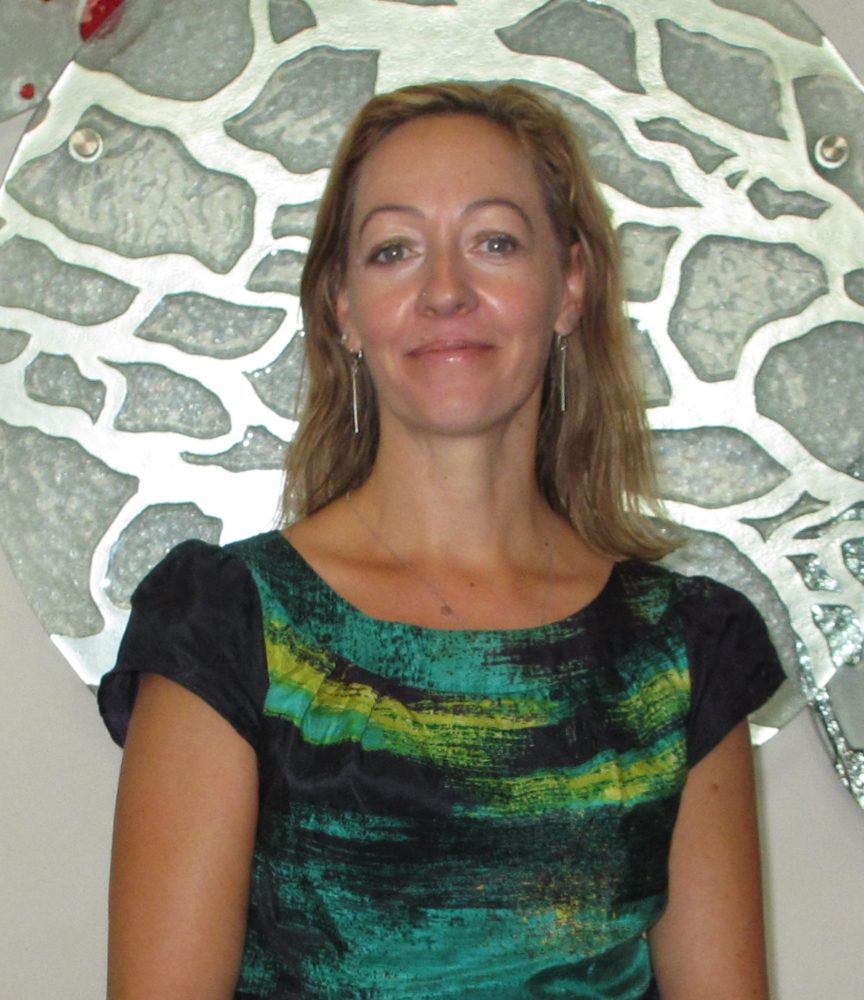
Nicola Benge
Nicola Benge was born in Paddington, London in 1974. Her experience recalls being a first-time mum and giving birth at Royal Sussex County Hospital.
Nicola speaks about going into labour early, which started after doing pregnancy yoga. Following an evening of contractions, Nicola contacted the hospital to get checked. After four days of not progressing, she decided to go into hospital. She remembers arriving around 10pm at night and going into the birthing pool, the stars were out and music was on and everything felt like it was going to be okay.
A consultant decided a caesarean was necessary, which happened very quickly. Because her son was early, he was taken to the The Trevor Mann Baby Unit, and Nicola talks about staying in an ensuite room at the unit.
She also recalls being knocked off her bike and responding badly to anaesthetic. And talks about the generosity of the staff at Royal Sussex County Hospital.
Recorded on 28/08/2019, Brighton, UK
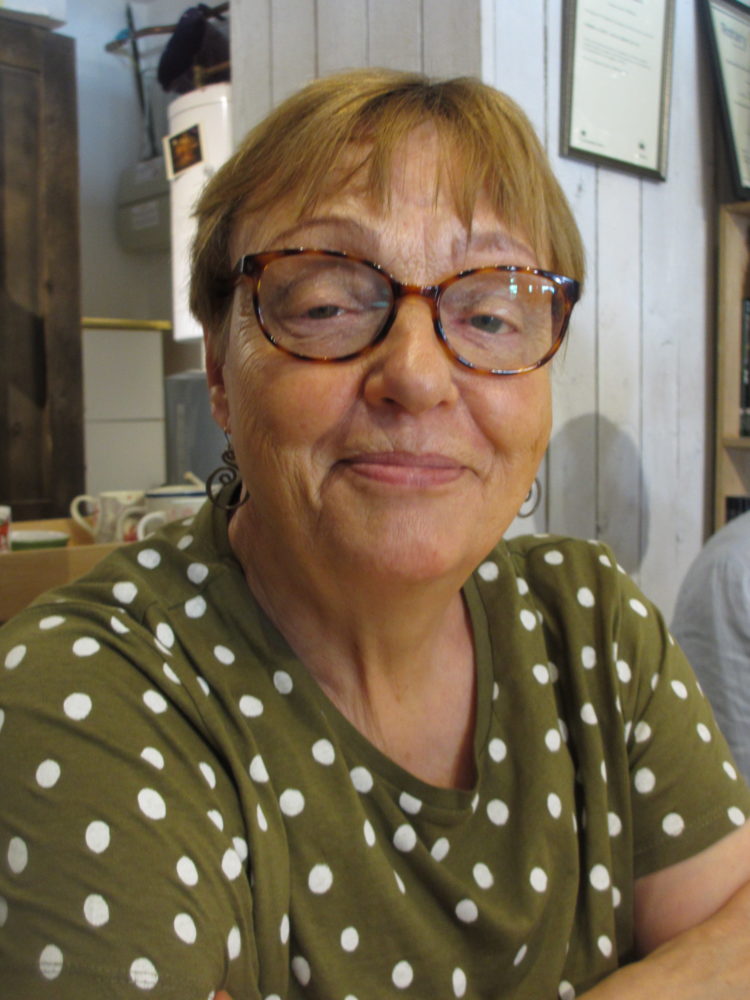
Janet Holm
Janet Holm was born in Sherborne, Dorset in 1946.
Janet recalls the diagnosis and treatment for gastroesophageal reflux disease (which is where acid from the stomach frequently leaves the wrong way, entering the tube connecting the stomach to the mouth) and her experience at Princess Royal Haywards Heath.
She recounts how the disease affected almost all of her life, including socialising, eating and sleeping, and talks about the various procedures she had to go through that took place over 5-6 years from 2012.
Janet also talks about her experience at A&E at Royal Sussex County Hospital (RSCH) following a fall. She describes the differences between RSCH and Princess Royal in Haywards Heath, saying RSCH was run down while Princess Royal was clean and modern.
Recorded on 26/08/2019 (wrongly stated as 2011 on recording) in Brighton, UK.
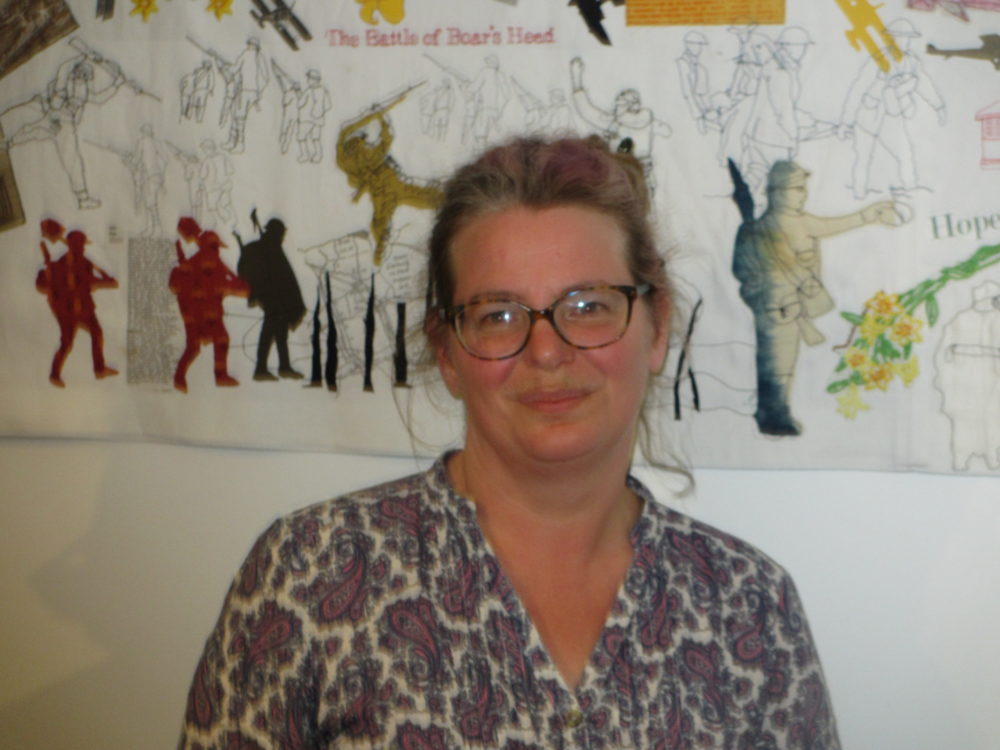
Andrea Finch
Andrea Finch was born in Malden, Essex in 1972.
Andrea talks of the three years she spent working in the Records Department (primarily within the Medical Secretary’s Office and Cardiac Department) of the Royal Sussex County Hospital Out-Patients Department.
She also touches on her experiences as a patient and as a relative of patients who have attended both the Royal Sussex County Hospital and the Princess Royal Hospital. She enjoyed her time in her job despite the hierarchy, lack of recognition and low salary.
Recorded on 27/08/2019 in Brighton, UK.
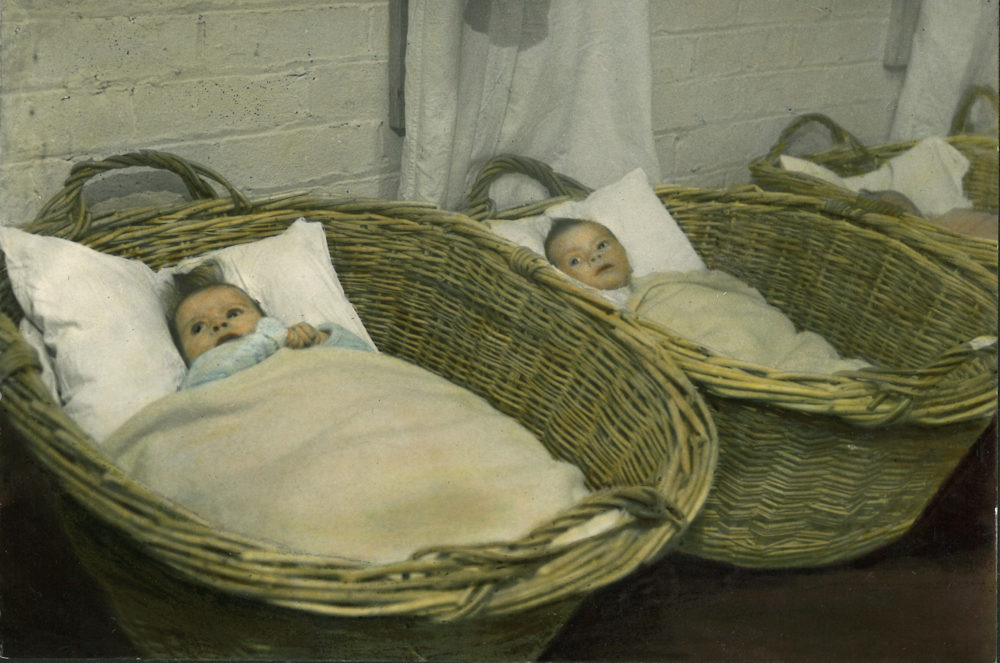
Babies in Moses baskets at Royal Alexandra Hospital, 1940s
A colourised photograph of infants in Moses baskets at Royal Alexandra Hospital, now part of Royal Sussex Hospital, 1940s. It is difficult to tell the exact age of these young patients, but they look to be between three and six months old. We do not have any details on why they were admitted, but these particular babies were obviously not suffering from infectious diseases, and would have been admitted for other reasons.
Image courtesy of Brighton & Sussex University Hospitals NHS Trust.